1. "The Art of Lying Down: A Guide to Horizontal Living," a book by Bernd Brunner that is an "ode to lying down... ranging from the history of the mattress to the 'slow living movement." It "makes an eloquent case for the importance of lying down in a world that values ever greater levels of activity," and presents lying down as "a protest."
2. A New Republic piece by Ben Crair about protesting against excessive activity by staying in bed. "When you’re in bed, everything seems too far away, even the other rooms of your apartment—and I live in a studio. My water intake dropped to almost zero, which I never noticed until I went outside on some errand and found myself desperately thirsty after a few minutes of leisurely walking. One evening, returning home, I planted my right foot on a step in the hallway, and lifted my left foot assuming it would follow, but nope: It went back down exactly where it had started."
3. There's this new essay in The New Yorker by Evgeny Morozov called "Only Disconnect/Two cheers for boredom," that begins with a reverie about a 1903 essay called "The Metropolis and Mental Life," that says closing the shades and "surrendering oneself to one's boredom on the sofa" is good response for people who "are pushed deeper and deeper into the hustle and bustle until eventually they no longer know where their head is." You'll need a subscription to read the whole thing, but I can tell you that Morozov is reading some new books that resonate with that old surrender-to-boredom-and-inactivity theme.
Showing posts with label TNR. Show all posts
Showing posts with label TNR. Show all posts
Wednesday, October 30, 2013

Thursday, May 2, 2013
"The Worst Gun Control Idea Has Bipartisan Support: Why states should not pass new mandatory minimums for firearm possession."
An article in TNR by Daniel Denvir. Excerpt:
"Research over many years has shown that mandatory penalties are limited because they address severity of punishment, not certainty," says Jeremy Haile of The Sentencing Project. "Because most people engaged in criminal activity do not expect to get caught, few think about the penalties they will face if convicted."
"The decent thing to do would be to repeal all existing mandatory penalties and to enact no new ones," Tonry concludes. One reason for this is that, though they are intended to bring consistency and transparency to the justice system, mandatory minimums instead create disparity and confusion. Prosecutors use the threat of draconian sentences to compel guilty pleas to lesser charges behind closed doors and nail those who want their day in court as harshly as possible.
Monday, April 29, 2013
The "golden age" of the blog is over.
Says Marc Tracy in The New Republic, which is a news opinion magazine, once edited by Andrew Sullivan, who went on to be one of the giants of the Golden Age of Blogging. If this is post-golden age for blogging, is it the golden age for anything else? There are these blogging-y things like Twitter and Buzzfeed (and I was going to add Facebook, but Facebook's golden age is past, right?).
Tracy is writing a "eulogy" for blogging on the occasion of the NYT shutting down a bunch of its blogs. But the NYT only had blogs in response to the blogging trend, and were those blogs really blogs? The real bloggers were people like Andrew Sullivan. Circa 2001:
Old media survived the onset of blogging, and blogging will survive Twitter, and Twitter will survive ???
Whatever comes along next will change what lives on from the old days. And the old folks will always tend to think that there was, not too long ago, a Golden Age.
ADDED: I think this is very relevant: "...the rise of the internet media and social media and all that stuff. He hates it. Okay. He hates this part of the media. He really thinks that the sort of the buzzification, this isn’t just about BuzzFeed or Politico, and all the stuff, but he thinks that sort of coverage of political media has hurt political discourse. He hates it." (That's Chuck Todd on "Meet the Press" yesterday, talking about Obama.)
Tracy is writing a "eulogy" for blogging on the occasion of the NYT shutting down a bunch of its blogs. But the NYT only had blogs in response to the blogging trend, and were those blogs really blogs? The real bloggers were people like Andrew Sullivan. Circa 2001:
The Internet had empowered a few strong writers to create their own brand (if you were idiosyncratic—say, if you were gay, English, Catholic, and heretically conservative—then all the better) and a few strong big brands to create their own small brands....How impatient can we get? I'm getting impatient with Tracy right now. I want to interrupt and say that blogs are a great format if you have a distinctive voice, and not just if you have idiosyncratic attributes — like gay, English, Catholic, and heretically conservative. The form — the blog — was so great, so powerful, so liberating, that many, many writers said me too, often pushed by an old-style publisher like the NYT that needed to have blogs to seem up-to-date. What made the age golden was the greatness of some blogs, like Sullivan's, not the sheer number of blogs at any given time.
We will still have blogs, of course, if only because the word is flexible enough to encompass a very wide range of publishing platforms: Basically, anything that contains a scrollable stream of posts is a "blog." What we are losing is the personal blog and the themed blog. Less and less do readers have the patience for a certain writer or even certain subject matter.
Sullivan's blog was almost like a soap opera pegged to the news cycle—which I mean as the highest compliment.... A necessary byproduct was that even if you were a devotee, you were not interested in about half of their posts. You didn't complain, because you didn't have an alternative. Now, in the form of your Twitter feed, you do, and so these old-style blogs have no place anymore.So, when there were only blogs, one had no choice, but now that there are blogs and Twitter, no one will choose blogs anymore? That makes no sense. First, blogs were an alternative to old media. You could still read the New York Times and The Washington Post and provide your own operatic drama. There was a time when we read the newspaper and talked with family and friends about the stories over the breakfast table and in the coffeehouses. Later, it seemed cool to enlarge our circle of interlocutors with somebody from the internet, like Andrew Sullivan (or Glenn Reynolds). And if you got the nerve, maybe you'd offer yourself on a blog as somebody who was willing to be a virtual presence in other people's conversations. (And if you are me, you got one of those interlocutors to actually materialize at your breakfast table.)
Old media survived the onset of blogging, and blogging will survive Twitter, and Twitter will survive ???
Whatever comes along next will change what lives on from the old days. And the old folks will always tend to think that there was, not too long ago, a Golden Age.
ADDED: I think this is very relevant: "...the rise of the internet media and social media and all that stuff. He hates it. Okay. He hates this part of the media. He really thinks that the sort of the buzzification, this isn’t just about BuzzFeed or Politico, and all the stuff, but he thinks that sort of coverage of political media has hurt political discourse. He hates it." (That's Chuck Todd on "Meet the Press" yesterday, talking about Obama.)
Thursday, February 14, 2013
"The New Republic has abandoned its liberal but heterodox tradition and embraced a leftist outlook as predictable as that of Mother Jones or the Nation."
Writes Martin Peretz in the Wall Street Journal. Peretz was editor in chief of The New Republic from 1974 until 2011.
The magazine now seems to live in a space where those "little insurrections of the mind" are unwelcome. It is akin to the atmosphere in many colleges and universities: There are prevailing orthodoxies but they aren't recognized as such. Mr. Obama himself is the main one. The president is an object of fealty at the New Republic in a way that Woodrow Wilson and even Franklin Roosevelt never were.
Tuesday, February 12, 2013
After beginning its new design era with an Adorable Obama cover...
... which looked like this, The New Republic comes out with its next issue, addressing the subject of "The Republicans" ("The Party of White People"), and it looks like this:

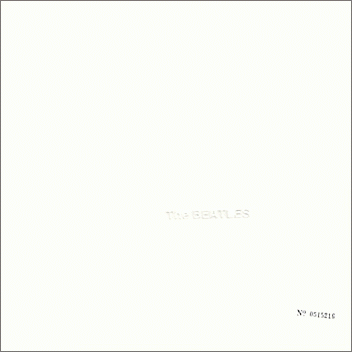
That came in the mail today. Yes, I've subscribed. The toy robot is there to cover up my address label. And yes, I understand the reference to "The Beatles" (i.e., The White Album).

That came in the mail today. Yes, I've subscribed. The toy robot is there to cover up my address label. And yes, I understand the reference to "The Beatles" (i.e., The White Album).
Tuesday, January 29, 2013
I subscribed to the redesigned New Republic website, but I can't get it to work... [UPDATED].
... on my digital devices and I can't find subscriber help on the website.
When I go to the website in my browser from my desktop computer, I can see that I'm signed in. I am certain I know my sign-in information and my password. I've downloaded the iPad app, but when it asks me to sign-in, it doesn't recognize my information. When I go back to my desktop computer and search the website through my browser, I can't find any relevant place to go for help with my subscription.
I subscribed because I wanted to have the app experience on iPad. I thought Chris Hughes, having succeeded in co-founding Facebook, would have the functionality worked out in a lovely way. The display of articles actually is pretty nice, and the free app works without a subscription.
I know they want to make money, and I was willing to credit Hughes — if he pulled it off — with finally figuring out how to make traditional print media into a digital experience worth paying for. I would have given this project good press if I could, but I'm getting nowhere.
Another thing. When I filled out the form to subscribe, I filled in many blocks of the form — name, address, credit card number — before clicking to continue. The page refreshed with a completely empty form and the information that I'd done my credit card number wrong. I can't believe I bothered to do the whole form a second time.
It's incredible, after all the Hughes hoopla, that they didn't test out the site in advance to see how it worked with ordinary people attempting to use it intuitively.
UPDATE: I sent an email to the address that thanked me for subscribing. I explained the problem, and I got a response saying that "the current issue on the iPad is free and therefore requires no login. So we've disable [sic] this for the short-term in order to give everyone a chance to read our relaunch issue. You'll be able to log in as normal when we release our next issue in two weeks."
So the message I was getting saying they didn't recognize my login information was misleading. They really would, presumably, recognize it, if it were needed, but it's not needed yet. This was incredibly annoying!
This also means that my statement "the free app works without a subscription" is wrong.
Monday, January 28, 2013
"The journalism in these pages will strive to be free of party ideology or partisan bias..."
"... although it will showcase passionate writing and will continue to wrestle with the primary questions about our society."
I must say, I'd never paid any attention to Chris Hughes before, and I didn't yesterday until pushed by my commenters. On the evidence of the interview he and Franklin Foer did with the President, I saw him as another media suckup doing Democratic Party politics under cover of journalism. Seeing this "free of party ideology or partisan bias" business now only inclines me to scoff. If that's what you wanted as your brand, why did you lead off with that interview?
But I realize I need to get up to speed on this Chris Hughes character. I didn't even bother to name him in yesterday's post, and I've only just made a tag for him now. Sorry, I didn't bother watching "The Social Network." To the extent that I follow celebrities, I'm not particularly drawn to new media businessmen. I can keep track of Mark Zuckerberg up to a point, but I've never paid attention to the lesser Facebookians.
Here's a HuffPo article from last March about Hughes's purchase of TNR, noting that he was "a key player in President Obama's online organizing efforts in 2008." Why would we expect this man — who's only 29, by the way — to strive to be free of party ideology or partisan bias? I've got to assume the striving is toward seeming to be free of party ideology and partisan bias, because that's what journalists always say they are doing when they have ideological and partisan goals.
Based on that interview with Obama, I'd say Hughes is not striving that hard or he's not good at what he's striving to do or — most likely — he only wants to appeal to Democrats, so he only wants to do enough to seem to be free of party ideology and partisan bias to Democrats. Is this enough to make our target audience feel good about the nourishment they're getting from this source? The good feeling is some combination of seeming like professional journalism while satisfying their emotional needs that are intertwined their political ideology and love of party.
Our purpose is not simply to tell interesting stories, but to always ask why these stories matter and tie their reporting back to our readers. We hope to discern the hidden patterns, to connect the disparate facts, and to find the deeper meaning, a layer of understanding beyond the daily headlines.So writes Chris Hughes about the redesign of The New Republic, which I was cranky about yesterday, because it kicked off with a kissy interview with Barack Obama.
I must say, I'd never paid any attention to Chris Hughes before, and I didn't yesterday until pushed by my commenters. On the evidence of the interview he and Franklin Foer did with the President, I saw him as another media suckup doing Democratic Party politics under cover of journalism. Seeing this "free of party ideology or partisan bias" business now only inclines me to scoff. If that's what you wanted as your brand, why did you lead off with that interview?
But I realize I need to get up to speed on this Chris Hughes character. I didn't even bother to name him in yesterday's post, and I've only just made a tag for him now. Sorry, I didn't bother watching "The Social Network." To the extent that I follow celebrities, I'm not particularly drawn to new media businessmen. I can keep track of Mark Zuckerberg up to a point, but I've never paid attention to the lesser Facebookians.
Here's a HuffPo article from last March about Hughes's purchase of TNR, noting that he was "a key player in President Obama's online organizing efforts in 2008." Why would we expect this man — who's only 29, by the way — to strive to be free of party ideology or partisan bias? I've got to assume the striving is toward seeming to be free of party ideology and partisan bias, because that's what journalists always say they are doing when they have ideological and partisan goals.
Based on that interview with Obama, I'd say Hughes is not striving that hard or he's not good at what he's striving to do or — most likely — he only wants to appeal to Democrats, so he only wants to do enough to seem to be free of party ideology and partisan bias to Democrats. Is this enough to make our target audience feel good about the nourishment they're getting from this source? The good feeling is some combination of seeming like professional journalism while satisfying their emotional needs that are intertwined their political ideology and love of party.
Sunday, January 27, 2013
"Can you tell us a little bit about how you've gone about intellectually preparing for your second term as president?"
The New Republic promotes its "redesign" in email that says I "signed up to get an early look at." (I did?) I'm sent to this interview with Obama, which takes so absurdly long to load that I go off and write other posts before rediscovering the open tab. I see Obama's smiling eyes peeking out over the top of the headline "Barack Obama is Not Pleased." I pause and contemplate 2 things: 1. Do the redesigners not understand the rules of capitalization? and, 2. Did they intend to allude to the famous Queen Victoria quote "We are not amused" — that is, did they intend to imply that Obama uses the royal "we"?
The subtitle is "The president on his enemies, the media, and the future of football," so I guess that's what he's "not pleased" about. I can see not being pleased by one's enemies, but how can he not be pleased by the media? The media fawn over him. What more can he want? And the future of football... I guess TNR threw that in to signal that there's going to be some fun somewhere on this page that took so long to load.
I scroll down past 6 paragraphs of introductory text to get to the actual interview, and that's the first question: "Can you tell us a little bit about how you've gone about intellectually preparing for your second term as president?" See what I mean about fawning? My first bite of the "redesign" is thoroughly cloying. It seems to be cloying even to Obama. He says:
That first question was asked by Chris Hughes. It took 2 fawning elite media guys to interview Obama. The other one is Franklin Foer, and his first question is: "How do you speak to gun owners in a way that doesn't make them feel as if you're impinging upon their liberty?" Later, FF comes up with:
By the way, credit to FF for extracting from Obama that he shoots guns "all the time," "up at Camp David," where "we do skeet shooting." I never hear about Obama going to Camp David. Where are the photos of Obama skeet shooting at Camp David?
There's some mystery within that pronoun "we."
The subtitle is "The president on his enemies, the media, and the future of football," so I guess that's what he's "not pleased" about. I can see not being pleased by one's enemies, but how can he not be pleased by the media? The media fawn over him. What more can he want? And the future of football... I guess TNR threw that in to signal that there's going to be some fun somewhere on this page that took so long to load.
I scroll down past 6 paragraphs of introductory text to get to the actual interview, and that's the first question: "Can you tell us a little bit about how you've gone about intellectually preparing for your second term as president?" See what I mean about fawning? My first bite of the "redesign" is thoroughly cloying. It seems to be cloying even to Obama. He says:
I'm not sure it's an intellectual exercise as much as it is reminding myself of why I ran for president and tapping into what I consider to be the innate common sense of the American people.I wish I could read what went through his head when he heard that question, before he said, in so many words, that's a stupid question. I think it was something like: These elite media guys are so in love with their idea of me as an intellectual.
That first question was asked by Chris Hughes. It took 2 fawning elite media guys to interview Obama. The other one is Franklin Foer, and his first question is: "How do you speak to gun owners in a way that doesn't make them feel as if you're impinging upon their liberty?" Later, FF comes up with:
Sticking with the culture of violence, but on a much less dramatic scale: I'm wondering if you, as a fan, take less pleasure in watching football, knowing the impact that the game takes on its players.Wait. We were talking about the "culture of violence" when we talked about gun rights and we're continuing to talk about "the culture of violence" when we talk about football?! Noted.
By the way, credit to FF for extracting from Obama that he shoots guns "all the time," "up at Camp David," where "we do skeet shooting." I never hear about Obama going to Camp David. Where are the photos of Obama skeet shooting at Camp David?
There's some mystery within that pronoun "we."
Subscribe to:
Posts (Atom)