Showing posts with label Africa. Show all posts

Friday, April 26, 2013

"Following Portugal's April 1974 Carnation Revolution..."

"... , it granted independence to Guinea-Bissau on 10 September 1974."
Luís Cabral, Amílcar Cabral's half-brother, became President of Guinea-Bissau.   Following independence local soldiers that fought along with the Portuguese Army against the PAIGC guerrillas were slaughtered by the thousands. A small number escaped to Portugal or to other African nations. The most famous massacre occurred in Bissorã. In 1980 PAIGC admitted in its newspaper "Nó Pintcha"...  that many were executed and buried in unmarked collective graves in the woods of Cumerá, Portogole and Mansabá.
Today's "History of" country is Guinea-Bissau.

Thursday, April 25, 2013

"In 1958 the French Fourth Republic collapsed due to political instability and its failures in dealing with its colonies,..."

"... especially Indochina and Algeria. The founding of a Fifth Republic was supported by the French people, while France's colonies were given the choice between more autonomy in a new French Community and immediate independence. The other colonies chose the former but Guinea — under the leadership of Ahmed Sékou Touré whose Democratic Party of Guinea had won 56 of 60 seats in 1957 territorial elections — voted overwhelmingly for independence. The French withdrew quickly, and on October 2, 1958, Guinea proclaimed itself a sovereign and independent republic, with Sékou Touré as president."

And that was the beginning of the modern state called Guinea, today's "History of" country.

Sunday, March 31, 2013

"Strictly speaking, ghana was the title of the king..."

"... but the Arabs, who left records of the kingdom, applied the term to the king, the capital, and the state."
The 9th-century Berber historian/geographer Al Yaqubi described ancient Ghana as one of the three most organized states in the region (the others being Gao and Kanem in the central Sudan). Its rulers were renowned for their wealth in gold, the opulence of their courts, and their warrior/hunting skills....

Ghana succumbed to attacks by its neighbors in the 11th century, but its name and reputation endured. In 1957, when the leaders of the former British colony of the Gold Coast sought an appropriate name for their newly independent state — the first black African nation to gain its independence from colonial rule — they named their new country after ancient Ghana. The choice was more than merely symbolic, because modern Ghana, like its namesake, was equally famed for its wealth and trade in gold.
Ghana is today's "History of" country.

Monday, March 25, 2013

How did this happen?


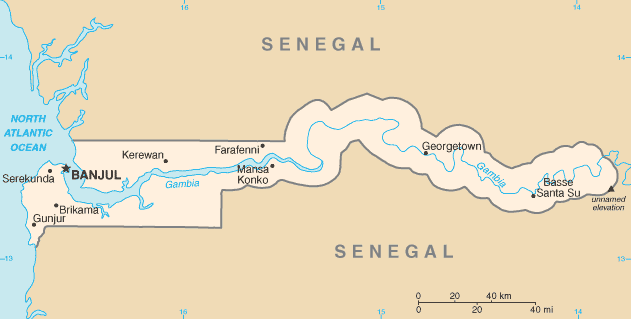
A river, a country: It's The Gambia, today's "History of" country.
In medieval times the area was dominated by the trans-Saharan trade. The reign of the Mali Empire, most renowned for the Mandinka ruler Mansa Kankan Musa, brought world wide recognition to the region due to its enormous wealth, scholarship, and civility....

As time went on the area began to suffer from continuous Moroccan and Portuguese invasion and looting. By the end of the 16th century, as the raids continued, the empire collapsed and was conquered and claimed by Portugal....

During the late 17th and throughout the 18th century, Great Britain and France constantly struggled for political and commercial supremacy in the regions of the Senegal and Gambia Rivers....

An 1889 agreement with France established the present boundaries, and the Gambia became a British Crown Colony, divided for administrative purposes into the colony (city of Banjul and the surrounding area) and the protectorate (remainder of the territory).

Sunday, March 24, 2013

"Portuguese traders who arrived in the 15th century named the country after the Portuguese word gabão, a coat with sleeve and hood..."

"... resembling the shape of the Komo River estuary. The coast subsequently became a center of the slave trade with Dutch, English, and French traders arriving in the 16th century."
France assumed the status of protector by signing treaties with Gabonese coastal chiefs in 1839 and 1841. In 1849, the French captured a slave ship and released the passengers at the mouth of the Komo; The slaves named their settlement Libreville, French for "free town." In 1910 Gabon became one of the four territories of French Equatorial Africa, a federation that survived until 1959.
Gabon is today's "History of" country. 


Union... travail... justice...

Sunday, March 17, 2013

"The British and Americans preferred to cede Eritrea to the Ethiopians as a reward for their support during World War II..."

Says the "History of Eritrea" page at Wikipedia. (In our "History of" project, we're proceeding through the world's 206 countries in alphabetical order.)
The resolution ignored the wishes of Eritreans for independence, but guaranteed the population some democratic rights and a measure of autonomy. Some scholars have contended that the issue was a religious issue, between the Muslim lowland population desiring independence while the highland Christian population sought a union with Ethiopia....

Tuesday, March 12, 2013

"The Portuguese explorer, Fernão do Pó, seeking a route to India, is credited with having discovered the island of Bioko in 1471."

"He called it Formosa ('beautiful [isle]', a name later applied to Taiwan), but it quickly took on the name of its European discoverer, albeit spelt 'Fernando Po.' The islands of Fernando Po and Annobón were colonized by the Portuguese in 1474.... From 1827 to 1843, Britain established a base on the island to combat the slave trade."

In Equatorial Guinea, today's "History of" country.

Tuesday, February 19, 2013

"Côte d'Ivoire officially became a French colony on March 10, 1893."

"French colonial policy incorporated concepts of assimilation and association. Assimilation presupposed the inherent superiority of French culture over all others, so that in practice the assimilation policy in the colonies meant extension of the French language, institutions, laws, and customs.... Under [the policy of association], the Africans in Ivory Coast were allowed to preserve their own customs insofar as they were compatible with French interests. An indigenous elite trained in French administrative practice formed an intermediary group between the French and the Africans.... As subjects of France they had no political rights. Moreover, they were drafted for work in mines, on plantations, as porters, and on public projects as part of their tax responsibility."

In Côte d'Ivoire – Ivory Coast — today's country in the "History of" project, wherein we read the Wikipedia "History of" page for each of the world's 206 countries, in alphabetical order. Next up? Here's a clue:

Friday, February 15, 2013

In 1491, King Nzinga a Nkuwu was baptized as the first Christian Kongolese king João I.

This happened after Captain Diogo Cão — on a mission from  King John II of Portugal — discovered the mouth of the Congo River and the Kingdom of Kongo and found the local nobility amenable to Christianity. Today, this place is called the Republic of the Congo, and it is today's "History of" country.

Wednesday, February 13, 2013

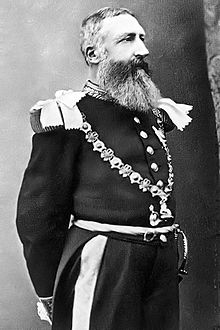
"The Congo Free State was a corporate state privately controlled by Leopold II, King of the Belgians...."

"Under Leopold II's administration, the Congo Free State became the site of one of the most infamous international scandals of the turn of the twentieth century. The report of the British Consul Roger Casement led to the arrest and punishment of white officials who had been responsible for cold-blooded killings during a rubber-collecting expedition in 1903, including one Belgian national for causing the shooting of at least 122 Congolese natives. Estimates of the total death toll vary considerably. In the absence of a census, the first was made in 1924, it is even more difficult to quantify the population loss of the period. Roger Casement's famous 1904 report estimated ten million people. According to Casement's report, indiscriminate 'war,' starvation, reduction of births and tropical diseases caused the country's depopulation."

The Congo Free State included all of what is now the Democratic Republic of the Congo, which is our "History of" country today.

Monday, February 11, 2013

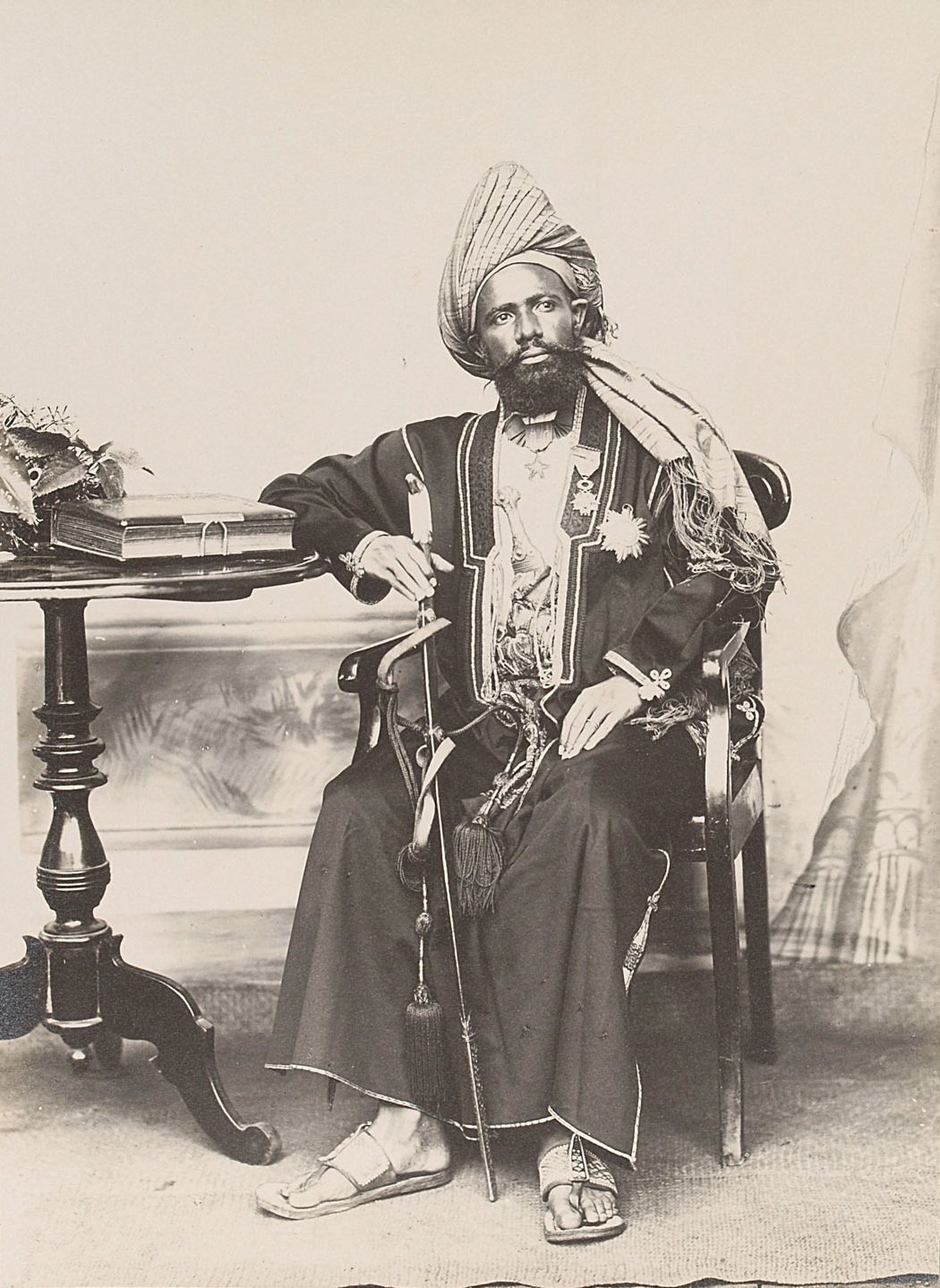
"The history of Comoros goes back some 1,500 years."

"According to myth, the Comoros islands were first visited by Phoenician sailors. The earliest inhabitants of the islands were probably Arabs and Africans, the latter probably Bantu-speaking... The most notable of these early immigrants were the Shirazi Arab royal clans, who arrived in Comoros in the 15th and 16th centuries and stayed to build mosques, create a royal house and introduce architecture and carpentry."

Comoros — it's some little islands near Madagascar — is today's "History of" country.

Wednesday, February 6, 2013

"The Kanem Empire originated in the 9th century AD to the northeast of Lake Chad."

"Historians agree that the leaders of the new state were ancestors of the Kanembu people. Toward the end of the 11th century the Sayfawa king (or mai, the title of the Sayfawa rulers) Hummay, converted to Islam. In the following century the Sayfawa rulers expandeded southward into Kanem, where was to rise their first capital, Njimi. Kanem's expansion peaked during the long and energetic reign of Mai Dunama Dabbalemi (c. 1221–1259)."


In Chad, today's "History of" country.

Tuesday, February 5, 2013

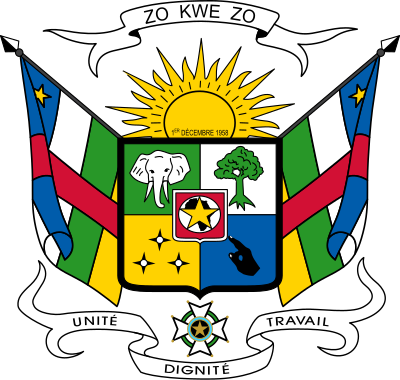
"The territory of modern Central African Republic is known to have been settled from at least the 7th century on by overlapping empires..."

"... including the Kanem-Bornu, Ouaddai, Baguirmi, and Dafour groups based on the Lake Chad region and along the Upper Nile. Later, various sultanates claimed present-day CAR, using the entire Oubangui region as a source of slave, from which slaves were traded north across the Sahara Desert."

Today's "History of" country is the Central African Republic.

Friday, February 1, 2013

"The earliest inhabitants of Cameroon were probably the Baka (Pygmies)."

"They still inhabit the forests of the south and east provinces...."

During the late 1770s and the early 19th century, the Fulani, a pastoral Islamic people of the western Sahel, conquered most of what is now northern Cameroon, subjugating or displacing its largely non-Muslim inhabitants.

Although the Portuguese arrived on Cameroon's doorstep in the 16th century, malaria prevented significant European settlement and conquest of the interior until the late 1870s, when large supplies of the malaria suppressant, quinine, became available....
Cameroon is today's "History of" country.

Wednesday, January 30, 2013

"European explorers and missionaries.... compared the organisation of the kingdom of Burundi with that of the old Greek empire."

"It was not until 1899 that Burundi became a part of German East Africa."
Unlike the Rwandan monarchy, which decided to accept the German advances, the Burundian king Mwezi IV Gisabo opposed all European influence, refusing to wear European clothing and resisting the advance of European missionaries or administrators. The Germans used armed force and succeeded in doing great damage, but did not destroy the king’s power. Eventually they backed one of the king's sons-in-law Maconco in a revolt against Gisabo. Gisabo was eventually forced to concede and agreed to German suzerainty.....
With WWI, Belgium took over, running things "through indirect rule, building on the Tutsi-dominated aristocratic hierarchy." Independence came in 1962, and "Tutsi King Mwambutsa IV Bangiriceng established a constitutional monarchy comprising equal numbers of Hutus and Tutsis." Horrific events follow.

In Burundi, today's "History of" country.

Monday, January 28, 2013

"From medieval times until the end of the 19th century, the region of Burkina Faso was ruled by the empire-building Mossi people..."

"... who are believed to have come up to their present location from northern Ghana, where the ethnically-related Dagomba people still live. For several centuries, Mossi peasants were both farmers and soldiers; as the Mossi Kingdoms successfully defended their territory, indigenous religious beliefs, and social structure against forcible attempts to conquer or convert them to Islam by Muslim peoples from the northwest."

Burkina Faso is today's "History of" country.


More recently, children of the 1983-1987 revolution: 

Sunday, January 20, 2013

"The Kingdom of Dahomey became a major power in the Atlantic slave trade..."

"... with slaves supplied through raids of surrounding areas.  Oyo would sometimes put pressure on Dahomey to decrease their slave trade, largely to protect Oyo's own trade, which would slow the trade for a while before it increased again...."

The place that was the Kingdom of Dahomey is now called the Republic of Benin, and it is today's "History of" country. The French took over circa 1870, and the finally let go in 1960:
Between 1960 and 1972, a succession of military coups brought about many changes of government. The last of these brought to power Major Mathieu Kérékou as the head of a regime professing strict Marxist-Leninist principles. By 1975 the Republic of Dahomey changed its name to the People's Republic of Benin. The People's Revolutionary Party of Benin (PRPB) remained in complete power until the beginning of the 1990s. Kérékou, encouraged by France and other democratic powers, convened a national conference that introduced a new democratic constitution and held presidential and legislative elections....