"A new national poll indicates, that for the first time, there may be an early frontrunner in the race for the 2016 Republican presidential nomination."
Christie gets 24%, polling against Rand Paul, Paul Ryan, Ted Cruz, Marco Rubio, Rick Perry, Jeb Bush, and Rick Santorum.
What about Scott Walker?
Showing posts with label 2016 campaign. Show all posts
Showing posts with label 2016 campaign. Show all posts
Friday, November 29, 2013

Tuesday, November 19, 2013
"If you are a Republican and you like New Jersey Gov. Chris Christie, then you probably already have your candidate for the 2016 presidential campaign."
"If you do not like Christie, then your candidate for 2016 is Wisconsin Gov. Scott Walker," says John Dickerson at Slate, who I doubt is keen on helping Republicans, but check out his argument. Excerpt:
Anyway, Walker's book "Unintimidated" is now available, beginning today. Subtitle: "A Governor's Story and a Nation's Challenge."
Don't confuse it with "Unintimidated," subtitle "Wisconsin Sings Truth to Power," which is a coffee table book of photographs celebrating anti-Walker protesters... at least the ones who put their protests in musical form. At only $31.50, it makes a great Christmas gift for the right person.
Walker has near hero status in the grassroots for taking on Wisconsin’s public sector unions. Cruz talks about taking stands on principle, but he lost his fight. Walker took a stand, was targeted by the full force of the Democratic machine, and stayed alive. He won a recall election with a larger margin than his original victory. He raised $30 million for that race, so he knows how to tap wealthy donors. Social conservatives also consider him one of their own for his pro-life views and his pedigree: His father was a Baptist minister.Speaking of the forceful machinery of Walker opposition, the Wall Street Journal had this the other day: "Wisconsin Political Speech Raid/Subpoenas hit allies of Scott Walker as his re-election campaign looms." Now, people can stop posting that link in the comments threads and emailing me about it. It's nice to see the WSJ get involved, but from my perspective out here in Wisconsin, the John Doe investigation became tedious long ago. I do see that there are some new subpoenas. Noted.
Anyway, Walker's book "Unintimidated" is now available, beginning today. Subtitle: "A Governor's Story and a Nation's Challenge."
Don't confuse it with "Unintimidated," subtitle "Wisconsin Sings Truth to Power," which is a coffee table book of photographs celebrating anti-Walker protesters... at least the ones who put their protests in musical form. At only $31.50, it makes a great Christmas gift for the right person.
Sunday, November 10, 2013
Chris Christie, being all Governor of New Jersey + presumptive presidential candidate, on all the Sunday shows.
Did you watch? I did. All of them — if "Fox News Sunday," "Face the Nation," and "Meet the Press" constitute all of them, as they do in my DVR. Did he say anything memorable? Well, he kept saying he was about being the Governor of New Jersey and simultaneously doing a performance of "This Is How I'll Look Running for President."
His favorite word is "work." From the "Fox News Sunday" transcript: working across the aisle, getting things done... what Congress needs to do is get to work, working with each other and the president to fix a broken system... I'll work with anyone and everyone who is willing to work with me... I'm going to continue to work really hard... From "Meet the Press": I'm ready to get back to work.... I've worked hard with the Hispanic community to let them see how our policies can help their families. I've worked hard with the African-American community. I've worked hard with seniors and students.... . And it's going to give me a mandate to go back to work for the people of New Jersey and finish the job.... We've got a lot of work still to do....
And on "Fox News Sunday" he was asked how he feels about people talking about how fat he is (like Time Magazine putting a profile of him on the cover with the line "The elephant in the room").
His favorite word is "work." From the "Fox News Sunday" transcript: working across the aisle, getting things done... what Congress needs to do is get to work, working with each other and the president to fix a broken system... I'll work with anyone and everyone who is willing to work with me... I'm going to continue to work really hard... From "Meet the Press": I'm ready to get back to work.... I've worked hard with the Hispanic community to let them see how our policies can help their families. I've worked hard with the African-American community. I've worked hard with seniors and students.... . And it's going to give me a mandate to go back to work for the people of New Jersey and finish the job.... We've got a lot of work still to do....
And on "Fox News Sunday" he was asked how he feels about people talking about how fat he is (like Time Magazine putting a profile of him on the cover with the line "The elephant in the room").
Oh, who cares? I mean, seriously. I'm on the cover of "Time" magazine, you know? It is certainly not the first weight joke that has been thrown my way over the course of the last four years.... So you know, it doesn't matter to me.... It does not matter to me, it really doesn't, and if you're going to be bothered by that kind of stuff, then you don't belong in public leadership. They can say whatever they like, it's fine by me.
Saturday, November 2, 2013
"[T]here is a growing sense within the Republican political intelligentsia that Christie and only Christie is positioned to solve the major problems that will face the party in 2016."
And: "Christie is increasingly seen as the one candidate who might be able to bridge the divide between the establishment and the tea party that is in the process of ripping the party apart."
Chris Cillizza says as he ranks Christie first among the GOP's possible candidates for 2016.
I interpret those 2 quoted sentences to mean the same thing, which is making 2 inferences:
1. "increasingly seen" = increasingly seen by the Republican political intelligentsia. (It's the intelligentsia that do all the seeing and sensing that matters to pundits like Cillizza.)
2. "the major problems that will face the party in 2016" = "the divide between the establishment and the tea party that is in the process of ripping the party apart." (The tea party is the problem from the perspective of the intelligentsia, right?)
(Also in the ranking: Wisconsin's Scott Walker comes in at #4, up from #7, and the other Wisconsinite, Paul Ryan has fallen from #4 to #9.)
Chris Cillizza says as he ranks Christie first among the GOP's possible candidates for 2016.
I interpret those 2 quoted sentences to mean the same thing, which is making 2 inferences:
1. "increasingly seen" = increasingly seen by the Republican political intelligentsia. (It's the intelligentsia that do all the seeing and sensing that matters to pundits like Cillizza.)
2. "the major problems that will face the party in 2016" = "the divide between the establishment and the tea party that is in the process of ripping the party apart." (The tea party is the problem from the perspective of the intelligentsia, right?)
(Also in the ranking: Wisconsin's Scott Walker comes in at #4, up from #7, and the other Wisconsinite, Paul Ryan has fallen from #4 to #9.)
Sunday, October 27, 2013
"Ted Cruz goes pheasant hunting in Iowa and says government shutdown was good 'because it got people talking.'"
Because Iowa's where you go to hunt pheasants.
I was going to write "Because Iowa's where you go to huntpeasants pheasants," on the theory that "peasant" isn't really an insult. It just means rural folk, but I looked it up in the (unlinkable) OED and changed my mind. It's been a term of abuse since the 1500s. My favorite abusive and old quote from the OED is:
Anyway, that ignoble, vilipendious, horse-rubbing peasant Ted Cruz seems to be running for President.
I was going to write "Because Iowa's where you go to hunt
1612 J. Taylor Laugh & be Fat sig. D7, Thou ignoble horse-rubbing peasant,..being but a vilipendious mechanical Hostler.Horse-rubbing! I think I know know what that means. But how about vilipendious? It means contemptible. I looked it up in the OED and the only example of its ever having been used was "Thou ignoble horse-rubbing peasant,..being but a vilipendious mechanical Hostler."
Anyway, that ignoble, vilipendious, horse-rubbing peasant Ted Cruz seems to be running for President.
Friday, October 18, 2013
"The people of Iowa are a whole lot like the people of Montana. And, of course, New Hampshire’s a lot like Montana."
"We don’t have a sales tax. 'Live Free or Die' — we understand that notion in Montana."
Thinking out loud about running for President.
That thought, expressed by Brian Schweitzer — ever heard of him? — reminds me of the discussion we were having last month about "national psychology" — "the (real or alleged) distinctive psychological make-up of particular nations, ethnic groups or peoples, and... the comparative study of those characteristics in social psychology, sociology, political science and anthropology."
1. Because this is a type of thinking that springs quite naturally to the human mind, and so much of it is forbidden. What little access to the relief of spewing such notions remains is so valuable to people that they self-protectively inure themselves to the problem.
2. Because even consciously thinking about it now, stereotypes about people from particular states don't seem too harmful. We're fortunate as Americans to have inherited these strange internal borderlines with charming names like Iowa and Montana, and our various thoughts about the people in these places gives texture and dimension to our concept of the people of America. It's not one big mass, it's We the People of the united STATES of America. It's a helpful visualization, even if it's pretty dumb — a map, with farmers standing on Iowa and so forth.
3. ???
Thinking out loud about running for President.
That thought, expressed by Brian Schweitzer — ever heard of him? — reminds me of the discussion we were having last month about "national psychology" — "the (real or alleged) distinctive psychological make-up of particular nations, ethnic groups or peoples, and... the comparative study of those characteristics in social psychology, sociology, political science and anthropology."
The assumption of national psychology is that different ethnic groups, or the people living in a national territory, are characterized by a distinctive "mix" of human attitudes, values, emotions, motivation and abilities which is culturally reinforced by language, the family, schooling, the state and the media.It's out of fashion:
Politically and morally... it is conducive to racist generalisations about people... [and] may lead directly to ascriptive discrimination against foreigners, meaning that one's own people are regarded as naturally superior....But when we step down a level of generality and talk about the psychology of the people of the various states of the United States, we somehow lose the sense that we're doing something wrong. Why?
Scientifically, because... [even if] generalizations and distinctions drawn are valid, they may be too general, or require too many qualifications, to be useful. There is an intrinsic difficulty involved in verifying national-psychological characteristics scientifically in any positivistic sense....
1. Because this is a type of thinking that springs quite naturally to the human mind, and so much of it is forbidden. What little access to the relief of spewing such notions remains is so valuable to people that they self-protectively inure themselves to the problem.
2. Because even consciously thinking about it now, stereotypes about people from particular states don't seem too harmful. We're fortunate as Americans to have inherited these strange internal borderlines with charming names like Iowa and Montana, and our various thoughts about the people in these places gives texture and dimension to our concept of the people of America. It's not one big mass, it's We the People of the united STATES of America. It's a helpful visualization, even if it's pretty dumb — a map, with farmers standing on Iowa and so forth.
3. ???
Friday, October 4, 2013
Today, at the University of Wisconsin—Madison, the law school presents a lecture by John Dean about Watergate, criminal law, and ethics.
That's later this afternoon. Meanwhile, here's a local media interview with Dean that engages him in some of the issues of the day. The interviewer Paul Fanlund invites Dean to attack today's Republicans with the prompt: "You wrote that book a few years ago and focused on politicians such as then-Vice President Cheney. But now the GOP looks ever more radical."
Dean says that 30% of Americans have a "personality trait" that some social psychologist he's talked to labels "authoritarianism," and that's now "the dominant force" driving Republican politics, which is why he and his friends — Dean lives in Beverly Hills — aren't Republicans anymore and also why Republicans are stuck with only 30% of the electorate. But Dean wonders "if the authoritarian people will ever get up to the 51 percent number because that would make a very different United States."
Unsuprisingly, Fanlund doesn't follow up with any questions about whether authoritarianism ever manifests itself in Democratic Party politics or whether some people with the authoritarian personality trait ever feel drawn into the hopes and dreams of left-liberal projects.
Fanlund's next question is a model of fawning and imprecision, the very opposite of what I'd want from a journalist: "You’ve done so much scholarship and have your first-hand experience. What do you think the future holds?"
Dean has just about nothing to say, so Fanlund proceeds to the topic of Wisconsin: "Last year I wrote about your assessment of Scott Walker, our governor, as a classic authoritarian personality." How did I miss that analysis? Dean says Walker is "so strikingly Nixonian that I cannot (turn away) out of fascination."
Dean picks up the cue:
This is a telephone interview, and Dean is phoning it in. From Beverly Hills. And guess what? He is surprised. Frankly, he's surprised, but maybe he shouldn't be so surprised, because, after all, Joe McCarthy... blah blah... "maybe there are still people that kind of politics appeals to".... you know, the kind of people with that authoritarianism personality trait. Maybe they're still around out there somewhere in Wisconsin. Not Madison, of course, where it's worth flying in from Beverly Hills to speak to people who can't possibly be authoritarian.
Dean says that 30% of Americans have a "personality trait" that some social psychologist he's talked to labels "authoritarianism," and that's now "the dominant force" driving Republican politics, which is why he and his friends — Dean lives in Beverly Hills — aren't Republicans anymore and also why Republicans are stuck with only 30% of the electorate. But Dean wonders "if the authoritarian people will ever get up to the 51 percent number because that would make a very different United States."
Unsuprisingly, Fanlund doesn't follow up with any questions about whether authoritarianism ever manifests itself in Democratic Party politics or whether some people with the authoritarian personality trait ever feel drawn into the hopes and dreams of left-liberal projects.
Fanlund's next question is a model of fawning and imprecision, the very opposite of what I'd want from a journalist: "You’ve done so much scholarship and have your first-hand experience. What do you think the future holds?"
Dean has just about nothing to say, so Fanlund proceeds to the topic of Wisconsin: "Last year I wrote about your assessment of Scott Walker, our governor, as a classic authoritarian personality." How did I miss that analysis? Dean says Walker is "so strikingly Nixonian that I cannot (turn away) out of fascination."
It’s kind of like the moth to the candle, I keep an eye on him. And I am likely to see pigs flying before he’s president.So Walker is like Nixon, but somehow it's impossible for him to become President. Dean's not making a whole lot of sense in this phone interview, and Fanlund prompts him again: "Because of how Walker’s personality would play out with a national electorate?"
Dean picks up the cue:
Exactly. The country is not ready for him unless he skews far to the middle from where he is....Isn't that easier than pigs flying? Dean blathers about moderation, and Fanlund offers some more help: "What struck us in Wisconsin, as much as anything, is how Walker, unlike governors I’ve known for three decades, made it clear from the start that he wasn’t interested in representing all of us, only those who elected him. Are you surprised?"
This is a telephone interview, and Dean is phoning it in. From Beverly Hills. And guess what? He is surprised. Frankly, he's surprised, but maybe he shouldn't be so surprised, because, after all, Joe McCarthy... blah blah... "maybe there are still people that kind of politics appeals to".... you know, the kind of people with that authoritarianism personality trait. Maybe they're still around out there somewhere in Wisconsin. Not Madison, of course, where it's worth flying in from Beverly Hills to speak to people who can't possibly be authoritarian.
Thursday, October 3, 2013
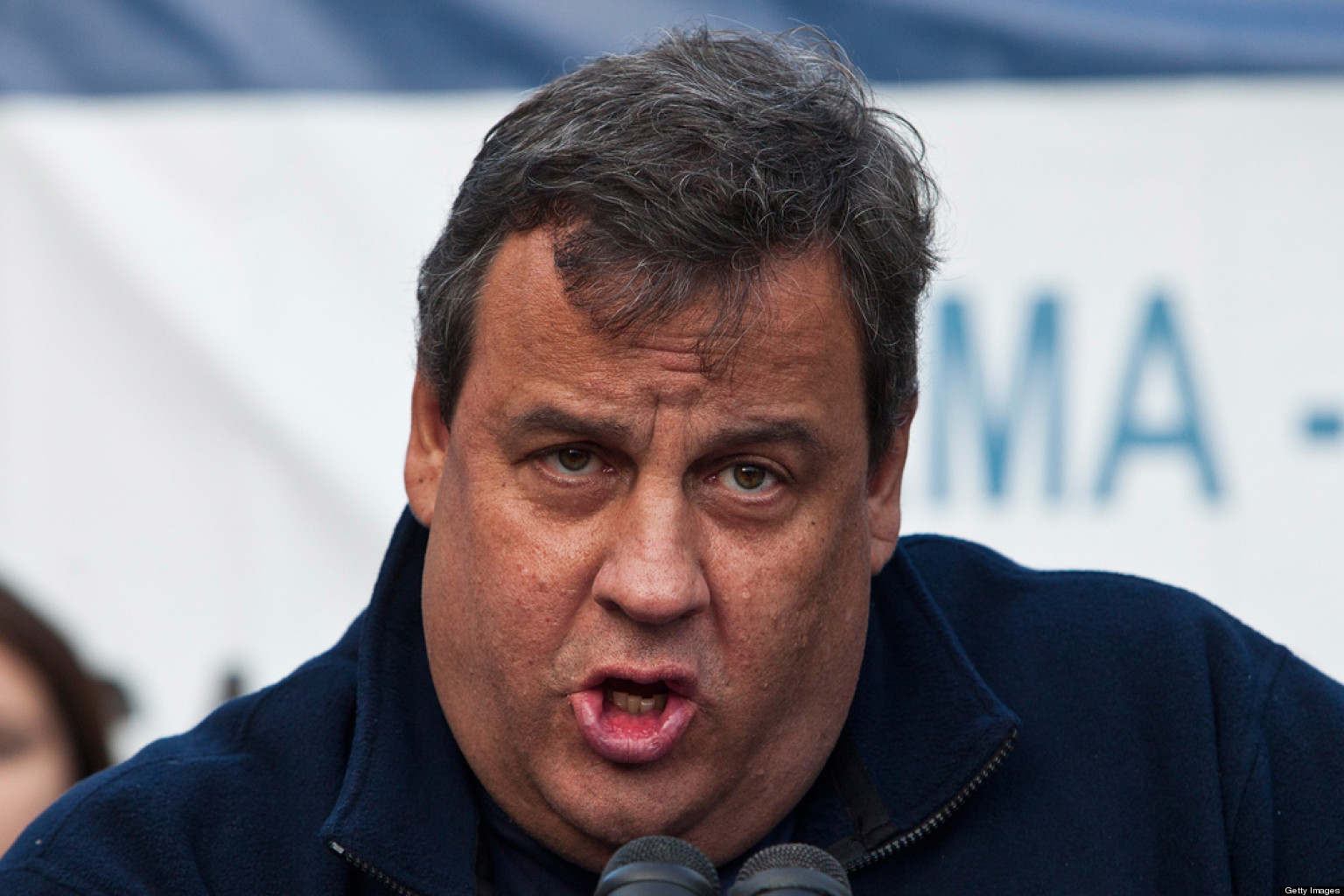
Chris Christie smiling.

This post is the first in a series, premised on my observation that the candidate with the best smile wins the presidency. I'm not certain that's true, at least not all the time, but it explains a lot, as long as you start in 1976, when a man won the presidency almost entirely because of a gigantic, toothy smile.
So what I'm doing is a Google image search on a presidential candidate's name along with the word "smiling," then picking the least smiley photograph that comes up. I'm starting with Chris Christie because the results made me laugh, and I had a hard time choosing between the photo above and this one:
Thursday, August 22, 2013
"Right now, I’ve got my hands full being governor... I’m not real involved yet."
"Strike that last word."
Said Scott Walker, quoted in a Politico article titled "Scott Walker’s stealth 2016 strategy."
Said Scott Walker, quoted in a Politico article titled "Scott Walker’s stealth 2016 strategy."
Tuesday, August 20, 2013
"As governors, as state leaders, we’re more optimistic than our friends in Washington."
"We’re not just against something, we’re laying out a plan, laying out a vision. You don’t just sit back and nick the other side – you got to lay out a plan."
Said Scott Walker on "Morning Joe" yesterday. And then today:
Said Scott Walker on "Morning Joe" yesterday. And then today:
Wisconsin Gov. Scott Walker slammed fellow Republicans Gov. Chris Christie (N.J.) and Sen. Rand Paul (Ky.) for thinking ahead to the 2016 election.That's a slam? I'd like to see the whole transcript. What was the question, and was Walker doing anything other than declining to talk about speculation that he'll be a candidate?
“At least on the Republican side I think it's too early,” Walker said on Fox News Tuesday morning. “I think it's a disservice both to the party and to the country.”
Monday, August 19, 2013
"Rand Paul is... strongly against abortion rights, which many libertarians disagree with."
"What is the libertarian position on abortion?"
I like libertarians when they back off from stark ideology, which really is not presentable to the American people, who require a closer approximation to something that feels like humanity. It's fascinating to watch Rand Paul supply the performance in the role of Libertarian that Americans can watch.
I don't think there is a libertarian position on abortion. There was a study done by a graduate student at UCLA that found that about two-thirds of people you would identify as libertarian are pro-choice. From a philosophical perspective, libertarians generally believe the appropriate role of government is to protect life, liberty, and property. The question is, is forbidding abortion a way of protecting life, or should it be viewed as a restriction of liberty? There's a plausible libertarian case on both sides. People who are consciously libertarian are more respectful of the other position on abortion, in my experience, than most pro-lifers and pro-choicers. I do not think there is an official position.From an interesting Atlantic interview — via Instapundit — titled "America's Libertarian Moment" ("A longtime libertarian policy wonk talks about whether the philosophy can save the GOP -- and why he still doesn't think Rand Paul can win the presidency"). Via Instapundit, who says: "Rand Paul doesn’t have to be elected President to change the direction of the country."
I like libertarians when they back off from stark ideology, which really is not presentable to the American people, who require a closer approximation to something that feels like humanity. It's fascinating to watch Rand Paul supply the performance in the role of Libertarian that Americans can watch.
Sunday, August 18, 2013
"New 'Crystal Ball' frontrunner for GOP nomination: Scott Walker?"
Allahpundit says "it’s the first time I’ve seen a major elections analyst name Walker as the man to beat."
From my live-blog of the debate:
When Scott Walker does campaign, he explains himself in a style that can be rejected as too bland. It's the opposite of flashy. It's earnest and Boy Scout.
Some people like that though. I do. I don't want my politician to be a rock star. Ironically, Walker's opponents called him a "rock star" and created the idea that he's a "rock star":
I agree with the basic outline: There’ll be a centrist champion, a right-wing champion, and then a compromise candidate who can draw from both camps. Sabato thinks that’s Christie, Rand Paul, and Walker, respectively. I think it’s likelier to be Christie, Cruz, and Rubio, with Rand Paul an X factor fueled by libertarians, but oh well.Walker is the compromise and somebody else is right wing? That sounds so weird here in Madison.
Sabato lists one of Walker’s potential key disadvantages as being too bland a la Tim Pawlenty. Really? The guy who broke the unions in Wisconsin and then humiliated big labor by winning his recall fight? He won’t have a blandness problem.Could you watch the video of Walker in the recall debate and rethink why he wins around here (and by here I mean Wisconsin, not Madison)? I'm not sure people around the country really get the Midwestern style. If you know Walker for standing up to the noisy protesters, you may picture him out there fighting, but in fact, he stayed calm and mostly out of sight and waited for the protests to die down, which they eventually did. The GOP had the votes in the legislature, so they simply took action.
From my live-blog of the debate:
Walker says if he could do it all over again, he'd have explained what he was doing, and most people would have agreed. He fixed it [the budget], then talked about it.It's easy to do something when you have the votes, harder to persuade everyone to accept it. He didn't try, and he admits he should have done better. You can say he was good at putting up with the outcry, but what choice did he have? Be silent or explain. He chose silence. He reminds me of George W. Bush who declined to defend himself when harshly criticized and trusted that in the long run people would understand. I can appreciate that and even find it admirable, but it might not work in a campaign.
When Scott Walker does campaign, he explains himself in a style that can be rejected as too bland. It's the opposite of flashy. It's earnest and Boy Scout.
Some people like that though. I do. I don't want my politician to be a rock star. Ironically, Walker's opponents called him a "rock star" and created the idea that he's a "rock star":
Thursday, August 15, 2013
"For any non-Clinton Democrat, exploring the 2016 election is something of an exercise in perceived futility, at least for the moment."
"She looms larger over the primary landscape than any undeclared candidate since perhaps Dwight Eisenhower, and the drop-off in prominence between her and the next tier of Democrats makes it all but impossible for any less famous politician to win consideration as a credible alternative."
Writes Politico under the headline "Non-Clinton Dems ask: Why not me?"
Isn't this the key to answering that question everyone was asking yesterday about why the NYT published that exposé "Unease at Clinton Foundation Over Finances and Ambitions"? No one else has a shot at positioning himself/herself for the Democratic nomination as long as the behemoth Clinton stands. Now's the time to be lining up support, and if Hillary is going to topple, she needs to topple at the right point on the time line for the Democratic Party.
Writes Politico under the headline "Non-Clinton Dems ask: Why not me?"
Isn't this the key to answering that question everyone was asking yesterday about why the NYT published that exposé "Unease at Clinton Foundation Over Finances and Ambitions"? No one else has a shot at positioning himself/herself for the Democratic nomination as long as the behemoth Clinton stands. Now's the time to be lining up support, and if Hillary is going to topple, she needs to topple at the right point on the time line for the Democratic Party.
Thursday, August 8, 2013
10 things Scott Walker should do to position himself to run for President in 2016.
A list, from "Right Turn" at WaPo. Excerpts:
3. Establish himself as the candidate that bridges the gap between the tea party and mainstream Republicans. He’s taken on the left, but not tilted at windmills....
8. Steel himself for the national MSM. Unlike New Jersey Gov. Chris Christie, who has been in the New York media market, and Beltway lawmakers who engage the press every day, Walker has had comparatively little experience in the national limelight. He will need a top-flight communications team....
Monday, June 24, 2013
"Is Scott Walker an Underdog or a Favorite?"
Asks Benjamin Domenech at Real Clear Politics.
Disrespect for the People of the Heartland rages out there on the coasts.
Now, Walker’s not yet a dynamic speaker, but his everyman persona is going to be more appealing in 2016 than pundits may recognize. His Men’s Wearhouse suits and accent are not the sort of things that appeal to the insider set – one gets the impression he would show up to the G8 meeting with an Old Navy American flag shirt, worn unironically, or start the State of the Union by saying he won’t keep you longer than ten minutes because there’s a game on.Gets the impression. No one would do that, right? You're just saying that you listen to him, you look at him, and that's the kind of thing you think.
Disrespect for the People of the Heartland rages out there on the coasts.
Monday, June 17, 2013
The National Journal asks "Is Scott Walker the GOP's Sleeper Presidential Candidate?"
"He's a popular blue-state governor with tea party appeal...."
CORRECTION: The link goes to the National Journal. I had "The Washington Post" in the headline for some reason.
"The recall was a gift to him in that it put him in touch with the big funders in the Republican Party, and I'm sure he keeps that Rolodex pretty close," said Brian Sikma, a spokesman for a conservative government watchdog group in Wisconsin. "I don't see any reason why he wouldn't run, and if you look at the tea leaves, he's taking all the traditional steps."...
But despite the attacks, Democrats have struggled to find a credible challenger eager to run against Walker in [the gubernatorial race in] 2014. The governor amassed a $30 million war chest for the recall campaign, while depleting the labor unions. Charles Franklin, a Marquette University professor of law and public policy, said Wisconsin Sen. Ron Johnson is viewed as more beatable in 2016 than Walker is in 2014.So it looks like he begins with plenty of money to use to run for reelection as governor and to run for President. In retrospect, that recall looks so profoundly stupid.
"The Democratic bench is thin right now, and Democrats face a real issue of how to fund a campaign against him," Franklin said.
CORRECTION: The link goes to the National Journal. I had "The Washington Post" in the headline for some reason.
Saturday, June 15, 2013
What's so momentous that Drudge is going all "It Begins" over Jeb Bush?

Drudge is linking to:
In an exclusive sit-down interview with The Brody File, Jeb Bush says that, “Hillary Clinton is a formidable force on the left.”Video at the link:
Jeb says: "Hillary Clinton is a formidable force on the left. I wouldn't discount her um her uh her ability...." I interrupt to say out loud: "I would discount your ability to get through a sentence."
Wednesday, June 5, 2013
I said it first: Chris Christie may run for President in 2016 as a Democrat.
Here's my post from June 3rd:
I assume Christie wants to run for President in 2016. If so, he can't reinforce the suspicion that he's really a Democrat (unless he wants to do that Lincoln Chafee thing and become a Democrat).Here's Rush Limbaugh on his show today:
I will not be surprised... I'm not predicting it officially here, but I will not be surprised, if when 2016 rolls around and Governor Christie is seeking the presidency, I won't surprised if he seeks the Democrat Party nomination...
Tuesday, May 28, 2013
Predicting the 2016 candidates: Rahm Emanuel vs. Rand Paul.
That's Meade's prediction. I'm delighted by that prospect, because I'd like to see these 2 highly verbal guys tearing into the issues.
I see that back in March, Ann Coulter said Rand Paul could not be the GOP candidate because "You can't run a short candidate," which may or may not be true, but both Rahm and Rand are short(ish). Rahm is 5'7" and Rand is 5'8". I don't think that's actually short, but there is a tendency among male politicians to be tall. We could speculate about the personality traits that are linked with male tallness/shortness and what that entails in their politics.
Wikipedia has a nice article on "Human Height," which includes a chart of the average heights in all the different countries. For the United States, the average height for men is 5'9.5" (5'10" if you restrict it to men in their 20s, and 5'10.5" if you restrict it to white men 20-30).
I see that the average height for females is 5'4", which makes me taller than average, even though I have had people refer to me as "short," to which I've always responded "Actually, I'm exactly average." I will change that to "Actually, I'm taller than average." (I'm 5'5".)
Now, Ann Coulter is 6 feet tall, so we might speculate about the personality traits of very tall women and the politics that ensue, but I'll just say perhaps contempt toward less tall men seems likely.
I see that back in March, Ann Coulter said Rand Paul could not be the GOP candidate because "You can't run a short candidate," which may or may not be true, but both Rahm and Rand are short(ish). Rahm is 5'7" and Rand is 5'8". I don't think that's actually short, but there is a tendency among male politicians to be tall. We could speculate about the personality traits that are linked with male tallness/shortness and what that entails in their politics.
Wikipedia has a nice article on "Human Height," which includes a chart of the average heights in all the different countries. For the United States, the average height for men is 5'9.5" (5'10" if you restrict it to men in their 20s, and 5'10.5" if you restrict it to white men 20-30).
I see that the average height for females is 5'4", which makes me taller than average, even though I have had people refer to me as "short," to which I've always responded "Actually, I'm exactly average." I will change that to "Actually, I'm taller than average." (I'm 5'5".)
Now, Ann Coulter is 6 feet tall, so we might speculate about the personality traits of very tall women and the politics that ensue, but I'll just say perhaps contempt toward less tall men seems likely.
Friday, May 24, 2013
"I would encourage us all to be more optimistic, more relevant and more courageous."
"I think when we do, we win in Iowa, we win in Wisconsin, and all across this great country, and we transform this place we live in."
Scott Walker in Iowa.
Scott Walker in Iowa.
Subscribe to:
Posts (Atom)