"... is subject to prosecution at the limitless discretion of local and State prosecutors, despite a general policy not to prosecute religiously motivated polygamy. The court finds no rational basis to distinguish between the two, not least with regard to the State interest in protecting the institution of marriage."
Says federal judge Clark Waddoups in Brown v. Buhman, a case about the Utah anti-bigamy statute, which makes it a felony "when, knowing he has a husband or wife or knowing the other person has a husband or wife, the person purports to marry another person or cohabits with another person." From the first time I noticed this issue, I've thought the answer was obvious. You can't punish people for the ideas they happen to have about why they are living in a household with multiple sexual partners. Call it a marriage or call it a sandwich. Imagine that God blesses your relationship or imagine that your kitty cats brought you together. It's no proper concern of the government's.
Now, if you want to legally register your marriage and qualify for various marriage-connected benefits and privileges, it's a different matter, and Judge Waddoups makes that clear. This case was not about that. It was about people who live together and perform private marriage rituals and call themselves married. Prosecuting these people, while other married people are left alone when they commit adultery, is criminalizing their speech and beliefs. If you understand the issue, I think you'll see this must be the answer.
This does not lay the groundwork for finding a right to marry multiple spouses any more than it compels the government to prosecute adulterers.
Showing posts with label Mormons. Show all posts
Showing posts with label Mormons. Show all posts
Saturday, December 14, 2013

Friday, November 29, 2013
"An LDS Bishop went undercover as a homeless man in his congregation last Sunday."
"He wanted to use his disguise as a tool to teach on compassion this Thanksgiving." (Video at the link.)
Ward member Jaimi Larsen also didn't recognize the homeless man as [David] Musselman... "He was dirty. He was crippled. He was old. He was mumbling to himself"....That story made me think of this passage in the New Testament:
Larsen says she watched from the chapel as Musselman walked to the pulpit - his disguise so real, she had no idea that he was about to reveal himself as their bishop. "He quoted the song 'Have I Done Any Good in the World Today?'," said Larsen.
“For I was hungry and you gave me something to eat, I was thirsty and you gave me something to drink, I was a stranger and you invited me in, I needed clothes and you clothed me, I was sick and you looked after me, I was in prison and you came to visit me.’
“Then the righteous will answer him, ‘Lord, when did we see you hungry and feed you, or thirsty and give you something to drink? When did we see you a stranger and invite you in, or needing clothes and clothe you? When did we see you sick or in prison and go to visit you?’
“The King will reply, ‘Truly I tell you, whatever you did for one of the least of these brothers and sisters of mine, you did for me.’
Sunday, October 13, 2013
"In some ways, writing about sex seems more easily accepted in the contemporary literary world than writing about being a person of faith."
"What has been your experience in trying to explain why you believed for so long?" an interviewer asks Nicole Hardy, author of "Confessions of a Latter-Day Virgin." She answers:
Ha ha. Have you ever tried to write about sex, like actually describe a sexual experience in detail? It's hard. The adjectives too, as well as nouns and verbs. That's why there's that annual Bad Sex in Fiction Award, where they embarrass writers of prestigious novels for writing things like "Like a lepidopterist mounting a tough-skinned insect with a too blunt pin he screwed himself into her."
Now, actually I don't think that's bad writing about sex. It's writing about bad sex. And the author of that winner of the Bad Sex in Fiction Award agrees with me:
The sex part is difficult to write about. The verbs are terrible, and the nouns are worse. But the emotional act of writing about faith is difficult, more exposing. Anyone who has had a positive experience in any religion understands the ways that faith can be a buoy and a comfort and a joy. But it is sometimes hard to explain the exact feelings you have when you’re having a sexual experience.I was surprised by Hardy's answer, which wasn't at all what the questioner was trying to elicit. The truth is it is hard to write about sex. The verbs are terrible, and the nouns are worse.
Ha ha. Have you ever tried to write about sex, like actually describe a sexual experience in detail? It's hard. The adjectives too, as well as nouns and verbs. That's why there's that annual Bad Sex in Fiction Award, where they embarrass writers of prestigious novels for writing things like "Like a lepidopterist mounting a tough-skinned insect with a too blunt pin he screwed himself into her."
Now, actually I don't think that's bad writing about sex. It's writing about bad sex. And the author of that winner of the Bad Sex in Fiction Award agrees with me:
[Rowan] Somerville says he was actually trying to paint a picture of bad sex in his novel....Even? Especially! That's the point. Too blunt?
"He has no idea how to actually make love. It's totally cold and inhumane... His sexual identity is profoundly scarred by his trauma."
When writing sex scenes, Somerville says, jokes come with the territory.
"I think you're never going to be able to integrate sex into a novel in a way that cannot be ridiculed," he says. Even citing sex scenes from Vladimir Nabokov's classic novel Lolita sound silly out of context, he adds.
Sunday, January 13, 2013
"I'm amused that right after 'potato, my penis droops' up pops Quayle."
I say, in the laughing-in-bed first-post-of-the-morning.
Quayle is a regular commenter here, but — who knows, on the internet? — it might be Dan Quayle.

Quayle responds: "I carry the blood of polygamists in my veins. So one should expect that sort of thing, I guess." He adds: "I took the name from my great grandfather, pictured here surrounded by some new friends."

That's a photograph of taken at the Utah Penitentiary in 1889, showing men arrested under the Edmunds-Tucker Act, explained here. Included in the photo is John C. Bennett, who "taught a doctrine of 'spiritual wifery'":
Here's John C. Bennett in happier days...

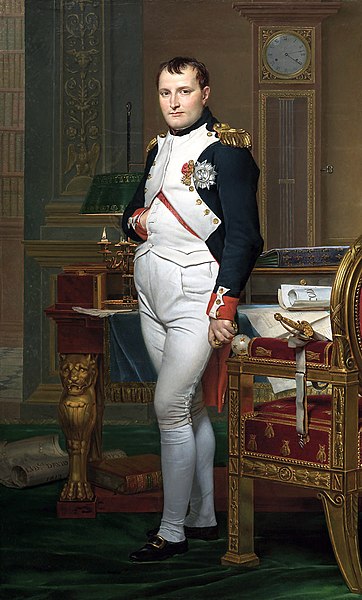
... posing like Napoleon:

Quayle is a regular commenter here, but — who knows, on the internet? — it might be Dan Quayle.

Quayle responds: "I carry the blood of polygamists in my veins. So one should expect that sort of thing, I guess." He adds: "I took the name from my great grandfather, pictured here surrounded by some new friends."

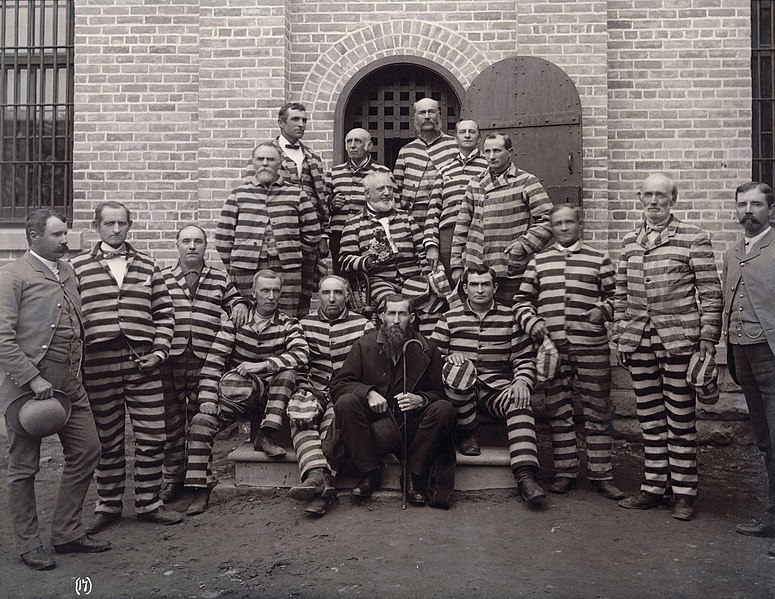
That's a photograph of taken at the Utah Penitentiary in 1889, showing men arrested under the Edmunds-Tucker Act, explained here. Included in the photo is John C. Bennett, who "taught a doctrine of 'spiritual wifery'":
He and associates sought to have illicit sexual relationships with women by telling them that they were married "spiritually," even if they had never been married formally, and that the Prophet approved the arrangement.That wasn't the correct doctrine, and Bennett got excommunicated, and then he "toured the country speaking against the Latter-day Saints and published a bitter anti-Mormon exposé charging the Saints with licentiousness."
Here's John C. Bennett in happier days...
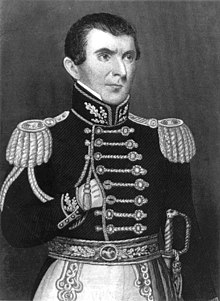
... posing like Napoleon:
Wednesday, December 26, 2012
The Bnei Menashe — one of the "lost tribes" — immigrate from India to Israel.
BBC reports:
Here's the Wikipedia article on the 10 lost tribes, including details of all the various claims and speculations. There are so many candidates — in Africa, all over Asia (the Pashtuns, the Japanese), in Europe (the Irish), and even in the Americas. The Book of Mormon goes into this topic:
"The members of this tribe have never forgotten where they came from and we are excited to be able to help them come back," [said said Michael Freund, chairman of the Shavei Israel group which helped organise the journey for the Bnei Menashe members.]There were 10 lost tribes in all. Were these people one of them? They maintained an oral tradition — dating back to the 8th century B.C. — telling of their migration through Persia, Afghanistan, Tibet, China, and ultimately to settle in northeastern India. Should skepticism be aimed at these people, or is it better to honor them and welcome them as symbolizing the idea of the lost tribes — which itself may be only a myth?
But some critics say the Bnei Menashe's link to Judaism are "historically untenable". They accuse the community of using their status to escape poverty India.
Here's the Wikipedia article on the 10 lost tribes, including details of all the various claims and speculations. There are so many candidates — in Africa, all over Asia (the Pashtuns, the Japanese), in Europe (the Irish), and even in the Americas. The Book of Mormon goes into this topic:
In the Book of Mormon, Lehi (Hebrew לחי Léḥî / Lāḥî "jawbone") was an ancient prophet who lived around 600 BC...
Shortly before the destruction of Jerusalem, Lehi escaped with his family, along with his friend Ishmael and his family, and another man named Zoram. Together, Lehi led them south down the Arabian Peninsula until they reached a fertile coastal region they named Bountiful. There, they built a ship, and sailed across the ocean to the Americas. Lehi's sons Nephi and Laman are said to have established themselves and to have founded Israelite nations: the Nephites and the Lamanites....
Many Mormons consider Native Americans to be descendants of the Lamanites. Officially, The Church of Jesus Christ of Latter Day Saints appears to accept this position....
Monday, December 24, 2012
"He wanted to be president less than anyone I’ve met in my life. He had no desire to... run."
Tagg Romney tells on his dad, Mitt.
In this context, here's a Ross Douthat column from last August, prompting Romney to reveal his Mormon faith:
"If he could have found someone else to take his place... he would have been ecstatic to step aside. He is a very private person who loves his family deeply and wants to be with them, but he has deep faith in God and he loves his country, but he doesn’t love the attention."Imagine what it would have been like if Mitt Romney had broken open and expressed all of this, but maybe that was inherently impossible. A self-effacing modesty was baked in.
In this context, here's a Ross Douthat column from last August, prompting Romney to reveal his Mormon faith:
The broader Mormon experience... could help make the case for his philosophy as well as illuminate his human core.... Conservatism sometimes makes an idol of the rugged individual, but at its richest and deepest it valorizes local community instead — defending the family and the neighborhood, the civic association and the church. And there is no population in America that lives out this vision of the good society quite like the Latter-day Saints.Imagine if all of that were opened out and shown to the American people. Well, you can't. I can't. Not in one modest man's campaign. Not with all the predictable pushback.
Mormonism is a worldlier, more business-friendly religion than traditional Christianity, but it does not glorify wealth for wealth’s sake... Mormonism represents “our country’s longest experiment with communitarian idealism, promoting an ethic of frontier-era burden-sharing that has been lost in contemporary America.”
Subscribe to:
Posts (Atom)