Showing posts with label Native Americans. Show all posts

Friday, November 29, 2013

The Daily Beast front-pages this teaser: "Scott Walker's Indian Mascot SNAFU."

What's the SNAFU?

[I]n Wisconsin... a Democratic governor and a legislature dominated by Democratic majorities in both houses passed a bill in 2009 that opened the door to force dozens of schools to change their Native American names.... In 2010, Republicans took control of both houses of the legislature, and this month they passed a bill that would require a complainant to collect signatures of 10 percent of the population of a given school district to change a name.
That's right, the new burden on mascot name changing is that you need to get 10% of the people in the district to sign a petition. And Gov. Scott Walker has to decide whether or not to sign it. His main problem with it seems to be that it's a "weird hybrid" instead of an outright appeal of the current law, which requires a hearing before before the state’s Department of Public Instruction if one person complains.
“What we found was that school districts in Wisconsin didn’t have a chance in front of the Department of Public Instruction in Madison,” said Sam Hall, a lawyer who represented Mukwonago [School District] in a lawsuit. “They had taken a position, and they were categorically opposed to all Indian-related mascots in all cases. It didn’t matter what the facts were. If DPI found that there was even the potential of a risk of harassment or discrimination based on a nickname, even if there was no actual harassment or discrimination inside the schools, they would rule against the district.”...
Political observers in Wisconsin said, however, that Walker is likely to sign the bill—it is red meat for his Republican base.

“This is like the nanny state cubed for the base."
Red meat... cubed... sounds like cube steak!
"This is the ultimate proof of the ‘we don’t want to hurt anybody’s feelings’ mentality,” said Mordecai Lee, a professor of government at the University of Wisconsin-Milwaukee and a former Democratic state lawmaker. “People resent being told that the nickname of their high school is offensive. Compared to the eye-glazing public policy that is most of what government does, this is like the death penalty. There is a yes and a no, and everybody has an opinion about it.”
The Democrats should have had the nerve to abolish all Indian mascot names, and the Republicans should have the nerve to repeal the Democrats' pusillanimous legislation, so here we are, with one roundabout, blame-shifting, pandering law tweaked into a differently structured but also roundabout, blame-shifting, pandering law. I find I must agree with The Daily Beast. It is Situation Normal All Fucked Up.

Saturday, October 26, 2013

Are you ready for a really glitzy version of the crudely animated TV cartoon "Mr. Peabody & Sherman."

Here's the trailer:


I especially appreciated the big faceful of armpit hair at 1:16. I remember that in the early days of computer animation hair was hard to do, so the characters tended to be insects or plastic toys. There's been so much progress since then, not that I've set foot into a theater showing a computer animation since I walked out of "Antz" because the closeup faces were making me ill.

The human faces in "Mr. Peabody & Sherman" are actually a lot like those insect faces that made me ill, except that they nail those smart-ass-kid expressions that — since the 1980s — TV has been teaching our children to make.

Of course, Mr. Peabody is a dog, so the hairs will have been minutely attended to. If I were to see this film — which I wouldn't, because I almost never go to the movies and I have a physical aversion to computer animation — I would be continually distracted by the constant minute wiggling and shimmering of the hairs as they — this is how I would think of it — show off that they can do hair.

ADDED:  Here's how the old TV cartoon looked. It was "crude" in the sense of its being done quickly and cheaply, but the drawing is actually quite vivid and charming. I love drawn cartoons, and I admire cheapness and quickness when the result is good, so I'm a bit sorry for using the word "crudely" in the post title. [AND: The particular "Mr. Peabody" cartoon I happened to find to link to there, which I just watched, has an Indian character of the smoke-um-peace-pipe sort that you'd never see today, and more strangely, there seems to be a swastika on one of the teepees.]

Thursday, October 10, 2013

"Racism of Sports Logos Put Into Context By American Indian Group."

"The National Congress of American Indians (NCAI) published a powerful poster..."
... featuring two baseball hats that each have a stereotypical racist image of a Jewish man and Chinese man to show it has the same connotation as the Cleveland Indians.

The hats were titled “New York Jews” and “San Francisco Chinamen.”


It's an effective poster, you have to admit. It says: You'd never accept those other stereotypes, so why do you accept this?


On the other hand, you can't say this doesn't exist:


Also, I would distinguish that cartoon-y Cleveland logo from the Redskins logo, which is a dignified image:


It's reminiscent of the profiles of Presidents seen on coins. And we did use to have "Indian Head" pennies. On the other hand, "Indians" is a more dignified name than "Redskins."

Thanks to Irene for sending me that top link. She stressed the use of the word "context" in the headline. "Context" is a tag here at Althouse. Irene's stress on "context" might refer to the context of some earlier blogging about context. This, about distinguishing between "implication" and "implicature"? This, about sex out of context? No, I suspect that Irene is being sarcastic about the claim that something is put into context when it is taken out of its place in the real world of culture and tradition and placed next to a couple of things that don't even exist.

But does that undercut the argument made in the poster? We — some of us — might accept the Indians/Redskins logo because we are used to it as it exists in the world that feels normal and natural, even as we would resist the intrusion of some new thing that was very much like it.

Isn't that a helpful thought experiment: What if this were introduced today, would we accept it? Is tradition enough to support something that would never be adopted if it were a proposed innovation?

Notice that I've just put the question at a very high level of abstraction. I've taken the logo controversy out of context. Please put that abstraction into other contexts and contemplate it.

Tuesday, July 2, 2013

"We've got Johnny Depp with a taxidermied crow on top of his head and painted to the nth degree... and he looks like a gothic freak."

"There's no way you can look at this and not say it's odd, unusual, strange, arresting, startling... It's a major setback for the Native American image in the world because that's how millions of people will think American Indians are now."

ADDED: The link above goes to an NPR item — "Does Disney's Tonto Reinforce Stereotypes Or Overcome Them?" — and after posting, I decided to check out the reviews for "The Lone Ranger." They're terrible.
How/why/wherefore did it turn out this way? The evidence suggests a combination of hubris, errant revisionism, a misguided and perverse degree of violence, and a script that never worked in the first place.
ALSO: From the sidebar at NPR's "Tonto" article, from just a few days ago, "Can 'Devious Maids' Really Break Stereotypes About Latinas?" ("Thankfully, the maids themselves aren't stereotypes. But there are no Latina bosses here.") From yesterday: "How A Minority Biking Group Raises The Profile Of Cycling." ("It was very powerful to have a group, like 60 or 70 riders who were all black rolling through a predominately black community on a bike.") And, also from yesterday: "The Secret History Of The Word 'Cracker.'" ("For many Southern whites, though, cracker has remained uncomplicated, a source of cultural pride.")

NPR means well, I'm pretty sure, as it talks and talks about race from an upper-middle-class white perspective. That's how it looks to me, anyway. 

Tuesday, June 25, 2013

Why did all 3 female Supreme Court Justices vote on the side of the father...

... in a case where the single mother — with no financial support from the biological father — chose to go forward with her pregnancy and chose adoptive parents, parents who were with her in the delivery room? The father gave up his parental rights via text message before the baby was born, and the child — a little girl — lived with those adoptive parents for 2 years before the state court gave her to the father. The only reason the father had an argument for taking the child was the Indian Child Welfare Act of 1978, a federal law intended to protect Indian families from public and private welfare agencies that Congress decided had been too aggressive. The Supreme Court majority — which included the one male liberal Justice (Breyer) — interpreted the statute not to apply in a situation where the biological father had never had custody of the child. Here is a mother who happened to have been impregnated by a man who is a member of an Indian tribe. Why was it appealing to the female Justices to allow this man to intrude on the mother's choice to give the baby up for adoption?

Here's the text of the case, Adoptive Couple v. Baby Girl.

The child is 1.2% Cherokee.


Consider that the states have traditionally handled family law, and Congress's power arises from the Commerce Clause.

Friday, May 10, 2013

"We will never change the name of the team. As a lifelong Redskins fan..."

"... and I think that the Redskins fans understand the great tradition and what it’s all about and what it means, so we feel pretty fortunate to be just working on next season. We’ll never change the name. It’s that simple. NEVER — you can use caps."

Tuesday, April 16, 2013

If race is to be taken into account, what kind of percentage of a particular race must an individual possess?

The oral argument in the Supreme Court today was about the federal Indian Child Welfare Act.
Under the state court's interpretation, said [Paul Clement, representing the guardian ad litem appointed by the state court to determine the child's best interest], ICWA moves the inquiry away from the child's best interests to focus instead on biology, the birth father and race — namely, that the child has 1 percent Indian blood.
1%! 

I am reminded of the Court's pending affirmative action case, Fisher v. University of Texas, in which there were some pointed questions at oral argument about the problem of taking race into account when the individual's racial percentage — always a sticky topic — is minimal and self-reported:

Back to today's case:
Pressed by the chief justice,  [Charles Rothfeld, representing the father] said that it doesn't matter how large or small a child's Indian heritage is because under ICWA, an adoption cannot go forward if a biological parent wants custody and is not a threat to the emotional or physical safety of the child.
Troubled by Rothfeld's contention, Justice Stephen Breyer noted that the father here appears to have "three Cherokee ancestors at the time of George Washington's father." And if you accept that view, said Breyer, "a woman who is a rape victim" could be at risk of having her child taken and given to the Indian father....
The court's decision in this case, [the adoptive parents' lawyer, Lisa Blatt] told the justices, is going to apply to other absentee Indian fathers who have impregnated non-Indian women. These women, she said, will be rendered "second-class citizens" with "inferior rights," and "you're basically relegating the child ... to a piece of property with a sign that says 'Indian, keep off, do not disturb.' "

Monday, April 15, 2013

Baby Veronica "deserves to be treated as a unique, multiethnic individual..."

"... whose best interests are not inexorably dictated by her blood connection to a tribal member."
The [Adoptive Couple v. Baby Girl] case has set off alarms among the tribes, and some child welfare experts, who consider the law the “gold standard” in attempting to keep children with their biological parents. Nineteen states and the United States have filed briefs defending the law.

Friday, April 12, 2013

"It is important not to create a precedent validating the prohibition of the sale of any object of a sacred nature..."

"... regardless of the culture concerned... Our goal has always been to showcase Hopi culture and make it accessible to the largest number of people and in strict compliance with the law."

Have you seen "Room 237" — the movie about what people think about the movie "The Shining"?

It was released for streaming — watch it here — at the same time that it opened in theaters. We watched last night. It will be quite fun for you, I think, if you've seen the movie "The Shining" — even if you're not obsessed with the movie — if you're interested in the way a work of art can draw people in and open up the doors of perception. With the revered genius director Kubrick cramming visual details in every shot, a viewer's mind can run wild with theories. The viewers' response to the movie parallels the Jack Nicholson character's response to the hotel. How crazy are these people? What do those cans of Calumet Baking Powder really mean?


Was Kubrick deliberately nudging you to think that the movie is really about the genocide of the Native Americans? Start looking for the other clues. It's amazing. It's a maze. You could get lost in there.

Was Kubrick trying to drive Stephen King crazy, like by making Jack's Volkswagen Beetle yellow instead of red and then later showing a crushed red Beetle under that semi in the snow?

Kubrick does these dissolves between scenes that have some interesting superimposed images — liked the peaked hotel roof and the ladder in the lobby — and the movie has several instances of characters walking backward — Shelley Duvall retreating up the stairs and swinging a baseball bat at Jack and the little boy retracing his steps in the snow to escape — and there's the backwards writing — "redrum" — so maybe Kubrick would like us to project the movie backwards and forwards simultaneously on one screen? Think what you could learn! All the secrets!

Well, I learned that Kubrick likes symmetry and puts things smack in the middle of the screen, which increases the likelihood of interesting combinations if you project backwards over forwards, but these people who obsess about the movie think Kubrick was trying to say something important. And what a coincidence! The message is about that person's central obsession — the slaughter of the Indians, the Holocaust, sex... 

Thursday, April 11, 2013

"If we could strip away the influences of modern Western culture and media and the high-fructose, high-salt temptations of the junk-food sellers..."

"... would we all be eating like Inuit elders, instinctively gravitating to the most healthful, nutrient-diverse foods? Perhaps. It’s hard to say. There is a famous study from the 1930s involving a group of orphanage babies who, at mealtimes, were presented with a smorgasbord of thirty-four whole, healthy foods. Nothing was processed or prepared beyond mincing or mashing. Among the more standard offerings— fresh fruits and vegetables, eggs, milk, chicken, beef— the researcher, Clara Davis, included liver, kidney, brains, sweetbreads, and bone marrow. The babies shunned liver and kidney (as well as all ten vegetables, haddock, and pineapple), but brains and sweetbreads did not turn up among the low-preference foods she listed. And the most popular item of all? Bone marrow."

Mary Roach, "Gulp: Adventures on the Alimentary Canal." (pp. 63-64).

Thursday, April 4, 2013

A quick wrap-up of today's incipient "mask" theme.

Sometimes the blog acquires a theme, like today, when the first post of the day was about masks that the Hopis don't like to call "masks" — you call them masks, we call them friends — and the second was a metaphorical use of the word "mask," to refer to Ben Carson's current persona. But I would be bullshitting if I said that the third and fourth posts were on theme. Oh, I could do that bullshitting. But I'm not going to waste your time. As the title of this, the fifth post, says, quick wrap-up. So here's the news about masks:

1. "Vogue models 'ate tissues' to mask hunger: Revelations follow similar claims by fashion industry insiders."

2. "Hamas militants’ menacing mask of defiance: Hooded gangs patrol Gaza as Israel fires first attack in months breaking fragile truce."

3. "A man wearing an 'old man' mask robbed a Cleveland Chase Bank Wednesday morning, the FBI said." (Hints for bank robbers: Use sunglasses to keep the rubber mask in place and to provide additional masking.)

4. "Do North Korea’s threats mask power struggle behind the scenes?" ("Those who study the Hermit Kingdom have very serious doubts that any attack on the U.S. or allies South Korea and Japan is even being seriously considered. 'It could be there’s a whole other game going on,' said Stephen Long, a North Korea expert at the University of Richmond.")

5. The General Zod mask from "Man of Steel" has been identified as the Halloween costume item for 2013, but the images that were at this link — purportedly terrifying — have been "removed at the request of the studio." Here's a 2010-era General Zod action figure, decidedly unscary.

6. "Police are looking for a man who went into a Turkey Hill [store] in Palmyra early Sunday morning wearing nothing but a ski mask." ("The man is described as a white male, approximately 50 years old, standing 6 feet tall with a 'heavyset' build. He had no visible scars, marks, tattoos or body piercings, police said." An amusing twist on the old phrase "no visible scars." Usually it refers to scars other than on the face. Here, the face is where the scars could be.)

7. The gas mask Justin Bieber wore around town in London last month was just "a joke." (And he "know[s] who [he is]" and is "not gonna let negativity towards [him] bring [him] down.")

So put down the tissues and eat some real food. Don't let the negativity bring you down, baby. Take off the gloomy mask of tragedy. It's not your style.

"The Hopis... regard the objects in the Paris sale, which they call Katsinam, or 'friends,' as imbued with divine spirits."

"They object to calling them 'masks' and say that outsiders who photograph, collect or sell them are committing sacrilege.... The Néret-Minet auction house... estimates that it will bring in $1 million. Many of the objects are more than 100 years old and carry estimates of $10,000 to $35,000.... 'Sacred items like this should not have a commercial value,' said Leigh J. Kuwanwisiwma, director of the Hopi Cultural Preservation Office in Kykotsmovi, Ariz. 'The bottom line is we believe they were taken illegally.'"

Wednesday, March 20, 2013

"Spouses Probably Shouldn't Try to Split Household Tasks Exactly Evenly."

Instapundit links to this piece by Noah Berlatsky in The Atlantic, which seems to state a comically obvious point. The "exactly" kind of gives it all away, doesn't it? You can't quantify tasks — different individuals take different amounts of time doing the same thing, different tasks have different degrees of arduousness (and the arduousness is different to different individuals both objectively and subjectively) — so the split couldn't be done exactly, even if that's what you wanted to do. Doing the calculations would add to the work, and different individuals would react differently to the arduousness — and symbolism — of that new dose of work. The idea is to get along better, not worse.

But there's some great stuff here: If you quantify and keep track, you are thinking in terms of debt. Berlatsky refers to David Graeber's book "Debt: The First 5,000 Years":
[M]any egalitarian societies make an enormous effort to keep clear of the logic of debt. Graeber tells a story about an Inuit man who offered a hungry anthropologist named Peter Freuchen a huge mound of seal meat. Freuchen thanked the man profusely. Freuchen recorded the man's response.
"Up in our country we are human!" said the hunter. "And since we are human we help each other. We don't like to hear anybody say thanks for that. What I get today you may get tomorrow. Up here we say that by gifts one makes slaves and by whips one makes dogs."
The logic of debt? Isn't that the logic of gifts? Keeping track of debts is a way of avoiding too much, doing only your fair share. Gifts complicate a relationship, adding joy to serving and transforming the experience of being served. Debts make a cooler transaction. But Berlatsky conflates debt and gift in the pursuit of the idea that human beings do things for one another in recognition of mutual humanity. He also — scarily — conflates marriage and egalitarian societies:
Societies like the Inuit put enormous social effort and pressure into making sure that excellent hunters don't end up putting everyone in their debt. Marriages, too, can slide towards hierarchy if you're not careful. There's a lot of years of inequity and a lot of learned gender roles telling men and women that women owe housework to their families—an obligation that (as the hunter suggests) can pretty easily end up feeling like, and even functioning as, slavery. That's why housework is a feminist issue—and why both men and women need to work to stop it from becoming the whip that makes one spouse the master and the other the dog.
Okay, I've done my fair share of the work of untangling the mixed up ideas in this article. But that paragraph is a mess. Why don't you clean it up?

I'm going to comment on the illustration The Atlantic paired with Berlatsky's idea salad. That looks like a more amusing task. It's Grant Wood's "American Gothic." Quick! I need a picture that represents a marriage... a bad marriage.


But the article critiques a modern-day version of a bad marriage, and "American Gothic" depicts a comical, cliché, old-fashioned marriage.

Anyway, I found a nice 2005 Slate article about "American Gothic." I hope you know the models for that painting were not a married couple that Wood found living in that house you see in the background. Wood found the house in Iowa, painted it, then got the idea to pose a couple characters in front of it. The woman is his own sister. The man was his dentist.
The critics who admired the painting in the early '30s — including Gertrude Stein and Christopher Morley — ... assumed it was a satire about the rigidity of American rural or small-town life, lampooning the people H. L. Mencken called the "booboisie" of the "Bible Belt." As [Steven] Biel [author of "American Gothic"] explains, "American Gothic appeared to its first viewers as the visual equivalent of the revolt-against-the-provinces genre in 1910s and 1920s American literature"—a critique of provincialism akin to Sherwood Anderson's Winesburg, Ohio, Sinclair Lewis' Main Street, and Carl Van Vechten's The Tattooed Countess.

But a few years later, as the nation sank into the Great Depression, people started to see Wood's painting in a different light. American Gothic was no longer understood as satirical, but as a celebratory expression of populist nationalism. Critics extolled the farmer and his wife as steadfast embodiments of American virtue and the pioneer spirit. "American democracy was built upon the labors of men and women of stout hearts and firm jaws, such people as those above," read one caption in 1935.
The political propagandists are everywhere, mining whatever material they can get their hands on. It's arduous work, but somebody's got to do it.

Sunday, March 3, 2013

"Christopher Columbus reached the island of Hispaniola on his first voyage, in December 1492."

"On Columbus second voyage in 1493 the colony and Santo Domingo became the new capital, and remains the oldest continuously inhabited European city in the Americas."
Hundreds of thousands Tainos living on the island were enslaved to work in gold mines. As a consequence of oppression, forced labor, hunger, disease, and mass killings, by 1535, only 60,000 were still alive. In 1501, the Spanish monarchs, Ferdinand I and Isabella, first granted permission to the colonists of the Caribbean to import African slaves, which began arriving to the island in 1503. These African importees have had the most dominant racial influence, and their rich and ancient culture has had an influence second only to that of Europe on the political and cultural character of the modern Dominican Republic.
The Dominican Republic is today's "History of" country. (In the "History of" project, we're going through the 206 countries of the world in alphabetical order and reading their "History of" page in Wikipedia.)

Thursday, February 28, 2013

"The Arawaks were guided to Dominica, and other islands of the Caribbean, by the South Equatorial Current from the waters of the Orinoco River."

"These descendants of the early Taínos were overthrown by the Kalinago tribe of the Caribs. The Caribs, who settled here in the 14th century, called the island Waitikubuli, which means 'tall is her body'. Christopher Columbus named the island after the day of the week on which he spotted it - a Sunday ('Doménica' in Italian) - which fell on 3 November 1493 on his second voyage."

In the place that we call Dominica,  today's "History of" county.

Friday, February 22, 2013

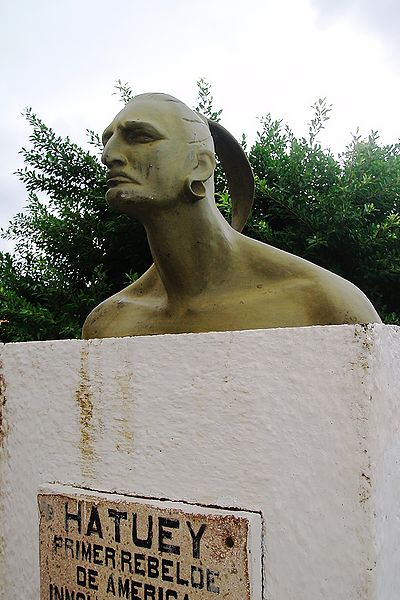
"In 1511, Diego Velázquez de Cuéllar set out from Hispaniola to form the first Spanish settlement in Cuba..."

"... with orders from Spain to conquer the island. The settlement was at Baracoa, but the new settlers were to be greeted with stiff resistance from the local Taíno population. The Taínos were initially organized by cacique (chieftain) Hatuey, who had himself relocated from Hispaniola to escape the brutalities of Spanish rule on that island. After a prolonged guerrilla campaign, Hatuey and successive chieftains were captured and burnt alive, and within three years the Spanish had gained control of the island. In 1514, a settlement was founded in what was to become Havana."

In Cuba, today's "History of" country.

Saturday, February 2, 2013

Adoptive Couple v. Baby Girl.

Here's a case the Supreme Court accepted for review last month that's about a father who gave up his parental rights via text message:

Facts of the Case
When the biological mother of Baby Girl became pregnant she did not live with the father and the father did not support the mother financially. The mother sent the father a text message asking if he would rather pay child support or relinquish his parental rights. He sent a text back, saying that he would relinquish his rights, though he later testified that he thought he was relinquishing his rights only to the mother. The biological father was a registered member of the Cherokee Nation. The biological mother attempted to verify this status, but spelled the father’s name wrong and misrepresented his birthday in the request, so the Nation could not locate the father’s registration. The mother listed Baby Girl’s ethnicity as “Hispanic” instead of “Native American” on the birth certificate. The mother decided to put Baby Girl up for adoption because she had two other children that she struggled to support.

Adoptive Couple, who resided in South Carolina, began adoption proceedings in that state. The Cherokee Nation finally identified the father as a registered member and filed a notice of intervention, stating that Baby Girl was an “Indian Child” under the Federal Indian Child Welfare Act (ICWA). The father stated that he did not consent to the adoption and would seek custody of Baby Girl. After trial, the family court denied Adoptive Couple’s petition for adoption and granted custody to the biological father. The court held that the biological father was a “parent” under the ICWA because of his paternity and pursuit of custody as soon as he learned that Baby Girl was being put up for adoption. Adoptive Couple did not follow the procedural directives in the ICWA to obtain the father’s consent prior to initiating adoption proceedings. The Supreme Court of South Carolina affirmed.

Question
Can a non-custodial parent invoke ICWA to block an adoption voluntarily and lawfully initiated by a non-Indian parent under state law?

Does ICWA define “parent” to include an unwed biological father who has not complied with state law rules to attain legal status as a parent?
More info here:  Baby Girl was 27 months old and had been living with the adoptive couple since birth when South Carolina Supreme Court told them that they were "ideal parents" but they had to turn the the child over to the biological father she had never met. Under state law, the child would stay with the parents, but the federal law "calls for special procedures rooted in the sovereignty of Indian nations and a history of abusive child welfare practices involving Indian children."

Saturday, January 19, 2013

Maybe it was named after the buccaneer Peter Wallace.

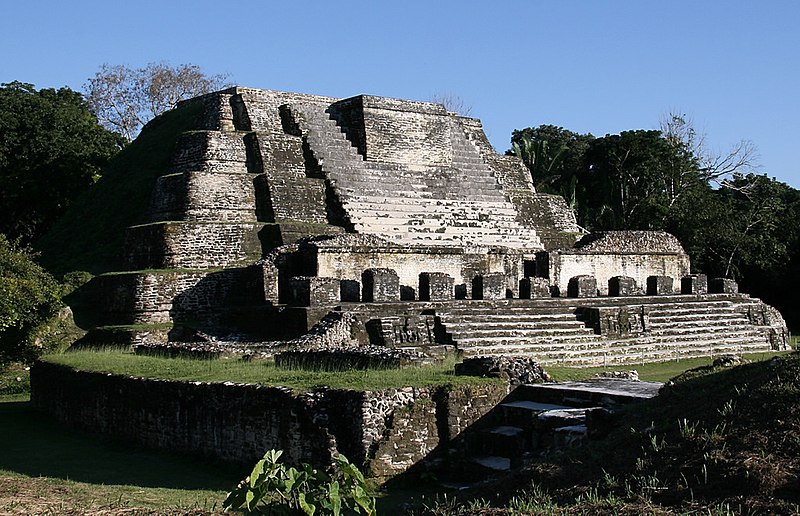
Belize — our "History of" country today. It's a legend, that the Spanish pronunciation of "Wallace" was Ballis and hence Belize. Belize. Do you know where it is? It's crammed in between Mexico and Guatamala.

In places that today look like this...


... the Mayans flourished and then they were gone. We don't really know why. You can blame the Spanish. (Why not? They deserve it.) But Mayan civilization had collapsed by the time the Spanish got there. Then the English arrived, by shipwreck, in 1638. Squabbling between the Spanish and the English went on for a long time, and there was a lot of piracy and "indiscriminate logging."