Showing posts with label Motown. Show all posts

Thursday, October 17, 2013

Great shakes.

The previous post talks about the 1960s dance called "the shake," which The Supremes were instructed to do with their "buttocks under" rather than "protruding." I wanted to see some video of what this old dance really looked like, a search that was complicated by the YouTube era meme the Harlem Shake... not to be confused with the actual dance called the Harlem Shake, which goes back to 1981 and is also not the 1960s shake I'm looking for.

I amend my search to "1960s dance  the shake," and I get this old TV commercial:


Both Meade and I felt a big nostalgic twinge of recognition at the point where the pyramid-shaped packets of powder are dumped out of the plastic shaker.

And speaking of pyramids, the inventor of the dance the Harlem Shake, Al B says:
It's a drunken shake anyway, it's an alcoholic shake, but it's fantastic, everybody loves it and everybody appreciates it. And it's glowing with glory. And it's respected. But if we could mystify it, and become historian, about this Egyptian jazz... Pharaohs invented this thing, with spears, and hats, and gowns. And so, it becomes a subject of being communicative to the system and to realization. If you get my drift.... It was a drunken dance, you know, from the mummies, in the tombs. That's what the mummies used to do. They was all wrapped up and taped up. So they couldn't really move, all they could do was shake...
Yes, but how about the 1960s dance? I see "'Shake!!' - RJ & The Del Guapos - (60's dances)," but the dancers are obviously doing the twist and the pony, so this is not an authoritative depiction. And here's a video with the Sam Cooke song "Shake" — "a new dance that's going around" — but, again, somebody just threw together clips of 60s people dancing a jumble of 60s dances. But I did immensely enjoy the appearance of  the word "shake" clipped from the Great Shakes TV commercial!

So... finally, here's The Supremes, singing and dancing "The Shake" on the British TV show "Ready Steady Go" in 1965. That's kind of bad. This is much better, also on "Ready Steady Go." The year is 1966:


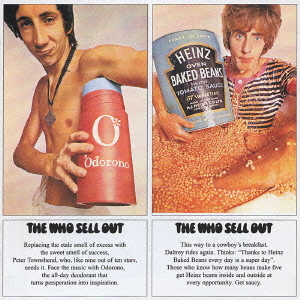
BONUS: The Who do a Great Shakes commercial. But those of us who followed The Who back then — I was a member of The Who Fan Club before they released their first album in the U.S. — know that The Who sold out early. It looked like this:
The woman who taught the Motown stars to behave in a manner that read as "class."

It's Maxine Powell, who died on Monday at the age of 98.
“Mrs. Powell was always a lady of grace, elegance and style, and we did our best to emulate her,” Martha Reeves, the former lead singer of Martha and the Vandellas, said in a telephone interview on Tuesday. “I don’t think I would have been successful at all without her training.... Every asset of my personality has been by her influence... Even to the end, she was making sure that I was standing with posture and exuberant grace.”
She scolded the Supremes about how they were dancing the shake. “You are protruding the buttocks... Whenever you do a naughty step like the shake, add some class to it. Instead of shaking and acting tough, you should roll your buttocks under and keep smiling all the time.” She showed them how to do it and: "They were shocked that I could do it and at how much better it looked my way."

Maybe you're thinking: Why aren't there any Maxine Powells around anymore to class up the pop stars of today? But there must be. They're simply classing them up to suit the taste of our time, which is to say putting them somewhere near the edge of what is acceptable to the big majority. More is acceptable today because of what went on in those earlier years. Dancing the shake at all — rolling the buttocks — was near the edge of acceptability in the 1960s. So that Powells' modification — smile when you roll those buttocks — shaped how people felt about such things and was part of a process that got us where we find ourselves today.

The NYT obituary — at the link — doesn't mention the topic of race (other than to say that Powell founded a finishing and modeling school "which placed the first black models" (was it only for black women?)). But it's hard to ignore that Motown succeeded in making black performers popular with white Americans, who might not have liked them so much if they hadn't been remade in the way Powell taught. What does it say about American racism? It was Powell's idea of what white people wanted and didn't want.

It worked, so who can say what would have happened if some other approach had been used?