Showing posts with label 1960s. Show all posts

Wednesday, December 4, 2013

"Since 1965, women with children have logged increasingly more time watching television and driving..."

"... and increasingly less time playing with children, doing chores, and exercising, according to a new report published this week in the journal Mayo Clinic Proceedings."
In 1965, mothers of children aged 5 to 18 spent 14.2 more hours a week being physically active than being sedentary. In 2010, they spent 3.8 more hours a week being sedentary than they did on physical activity.
Interesting, but why did they put driving in the same category with watching TV? Because one sits to do it? Chauffeuring the kids around used to count as one of the child-rearing tasks. I suspect the reclassification has to do with the focus on the woman getting enough exercise. We're so much less concerned with what's good for children that helping them get to their various events and social occasions is equated with lolling about in a recliner.

And why was "playing with children" seen as physically active? Much playing with children involves sitting around while they do things with toys and games. Building blocks, dressing dollies, playing Candyland and Old Maid, operating the electric train — these were all done sitting down. Yeah, there are those running and jumping around kids' games that we played in the 60s — tag, hopscotch, monkey-in-the-middle — but Mommy didn't play those games. It would have been bizarre for Mom to join in on, say, jump rope.

Much of the work of raising children has to do with simply being present and watchful over long periods of time. It's not an exercise routine. If Mother is concerned about burning calories she's probably less vigilant. I grew up in the 1950s and 60s, and my mother didn't play with me. But she was around, relatively nearby when I played. Kids played with kids. Go out and play. Find something to do. And we did. Whether she sat down and whether that sitting involved a TV doesn't matter. It so happens that my mother stood, read the newspaper, and listened to the radio. But you see my point: Child-rearing is not an exercise routine, and our present-day focus on adults getting exercise should be kept separate.

People today are really confused, it seems to me in my old age.

Wednesday, November 20, 2013

"You will spend the next hour watching this new video for Bob Dylan’s 'Like a Rolling Stone'..."

"...  Good luck not spending the rest of your day watching this."

I linked to that yesterday, and I'm only bringing it up again to observe that I — a big Dylan fan for 5 decades — spent only about a minute looking at it, which is much less than the length of the song itself. So what's the deal with all these journalists claiming that we're going to become obsessed with watching it for hours or all day?

The quote I've chosen for this post seems about typical to me. It comes from David Malitz at The Washington Post, and Malitz appears to be a fairly young person, at least not an old boomer Dylan fan like me.

My reaction to the video was: 1. Here's the Dylan song that's used to represent all Dylan songs when you want to reach the largest possible audience with the message that you are playing a Dylan song, 2. I'm hearing the Dylan recording but I'm seeing some TV person mouthing the words, a type of performance that is annoying even when your dearest loved one does it; it's not cute. 3. So there are a bunch of TV people who were willing to go on camera mouthing the words of the entire 6+ minute song. 4. Either show me Bob Dylan with the voice of Bob Dylan or cover the song with your own voice and do it well (not cutesy) or leave me alone.

People like Malitz aren't so much interested in the Dylan song as in the various TV personalities who signed on the project and did the full 6+ minutes of mouthing and the technological achievement of making an interactive video that allows you to drop in on the various celebrities at any point in the song. Isn't it charming how they're all there on different channels, all synched to the same place in the song? It's not so much about Dylan as it is about hey, it's Steve Levy, hey, it's The Property Brothers. This is what could occupy a lot of time: checking out who all the TV people are and being charmed by how they look keeping up with the song. You've got to find that cute.

But Dylan is not about cute. Sample Dylan uses of "cute":

"And she buttoned her boot/And straightened her suit/Then she said, 'Don’t get cute'..."

"Now your dancing child with his Chinese suit/He spoke to me, I took his flute/No, I wasn’t very cute to him, was I?"

It was all about not getting cute... back in the 60s. But now maybe, with these kids today, cuteness is what it takes. You're supposed to get cute.

Thursday, October 17, 2013

Great shakes.

The previous post talks about the 1960s dance called "the shake," which The Supremes were instructed to do with their "buttocks under" rather than "protruding." I wanted to see some video of what this old dance really looked like, a search that was complicated by the YouTube era meme the Harlem Shake... not to be confused with the actual dance called the Harlem Shake, which goes back to 1981 and is also not the 1960s shake I'm looking for.

I amend my search to "1960s dance  the shake," and I get this old TV commercial:


Both Meade and I felt a big nostalgic twinge of recognition at the point where the pyramid-shaped packets of powder are dumped out of the plastic shaker.

And speaking of pyramids, the inventor of the dance the Harlem Shake, Al B says:
It's a drunken shake anyway, it's an alcoholic shake, but it's fantastic, everybody loves it and everybody appreciates it. And it's glowing with glory. And it's respected. But if we could mystify it, and become historian, about this Egyptian jazz... Pharaohs invented this thing, with spears, and hats, and gowns. And so, it becomes a subject of being communicative to the system and to realization. If you get my drift.... It was a drunken dance, you know, from the mummies, in the tombs. That's what the mummies used to do. They was all wrapped up and taped up. So they couldn't really move, all they could do was shake...
Yes, but how about the 1960s dance? I see "'Shake!!' - RJ & The Del Guapos - (60's dances)," but the dancers are obviously doing the twist and the pony, so this is not an authoritative depiction. And here's a video with the Sam Cooke song "Shake" — "a new dance that's going around" — but, again, somebody just threw together clips of 60s people dancing a jumble of 60s dances. But I did immensely enjoy the appearance of  the word "shake" clipped from the Great Shakes TV commercial!

So... finally, here's The Supremes, singing and dancing "The Shake" on the British TV show "Ready Steady Go" in 1965. That's kind of bad. This is much better, also on "Ready Steady Go." The year is 1966:


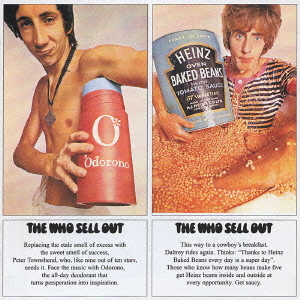
BONUS: The Who do a Great Shakes commercial. But those of us who followed The Who back then — I was a member of The Who Fan Club before they released their first album in the U.S. — know that The Who sold out early. It looked like this:

Sunday, September 22, 2013

Listening to Oliver.

Do you remember Oliver?
His clean-cut good looks and soaring tenor voice were the perfect vehicle for the uptempo single entitled "Good Morning Starshine" from the pop/rock musical "Hair," which reached #3 on the Billboard Hot 100 in July 1969, sold over one million copies, and was awarded a gold disc by the R.I.A.A. a month later. Later that fall, a softer, ballad single entitled "Jean" (the theme from the Oscar-winning film The Prime of Miss Jean Brodie) bested his previous effort by one, reaching #2 on the Hot 100 and #1 on the Billboard Easy Listening chart. Written by longtime beatnik poet Rod McKuen, "Jean" also sold over one million copies, garnering Oliver his second gold disc in as many months.
This kind of recording is the kind of thing that I rejected at the time as commercial/mainstream/square/cornball, but I'd recently rediscovered "Good Morning Starshine" and found it quite beautiful, enough to look him up in Wikipedia just now and enough to make me add "Jean" alongside "Good Morning Starshine" in my iTunes.

And remember Rod McKuen? Remember when people loved him and then the cultural elite delivered the message that you're supposed to hate him?

Frank W. Hoffmann, in Arts and Entertainment Fads, described McKuen's poetry as "tailor-made for the 1960s [...] poetry with a verse that drawled in country cadences from one shapeless line to the next, carrying the rusticated innocence of a Carl Sandburg thickened by the treacle of a man who preferred to prettify the world before he described it."

Philosopher and social critic Robert C. Solomon described McKuen's poetry as "sweet kitsch," and, at the height of his popularity in 1969, Newsweek magazine called him "the King of Kitsch."

Writer and literary critic Nora Ephron said, "[F]or the most part, McKuen's poems are superficial and platitudinous and frequently silly." Pulitzer Prize-winning US Poet Laureate Karl Shapiro said, "It is irrelevant to speak of McKuen as a poet."
Wow! Listen to the hate.

"'Listen to the Warm,' remember that?" I ask Meade, as I look for an Amazon link that I thought would go amusingly on the words "Listen to the hate," above. "You can't even buy that now." But I remember high school kids who clutched that book and felt lucky to have it. What other poetry books — in our lifetime — have experienced that kind of young love?

Meade says, "There was an audio," and you can still buy that.  And you can buy endless other works of poetry in audio form, albeit with music (or something approaching music) supporting the poetic verbiage so you don't have to think "poetry."

We're reveling this morning in "Good Morning Starshine"...
My love and me as we sing our
Early morning singin' song
And "Jean"...
Jean, Jean, roses are red
All the leaves have gone green
And the clouds are so low
You can touch them, and so
Come out to the meadow, Jean
Jean, Jean, you're young and alive
Come out of your half-dreamed dream
And run, if you will, to the top of the hill
Open your arms, bonnie Jean
Till the sheep in the valley come home my way
Meade says, "What'd he say? Till the sheep come home? Why not till the cows come home?"

I say that old Rod avoids clichés, at which point the first line of the song repeats, "Jean, Jean, roses are red," and we laugh.
And all of the leaves have gone green
While the hills are ablaze with the moon's yellow haze
Come into my arms, bonnie Jean
Jean, you're young and alive!!
If you're listening to the Oliver recording, you won't question those 2 exclamation points.
Come out of your half-dreamed dream
And run, if you will to the top of the hill
Come into my arms, bonnie Jean
Superficial and platitudinous and frequently silly....

"What's that line," Meade asks "'Come out of your half dream...'?" I'm reciting the lyrics and Meade has free-associated, via "dream," to "Time passes slowly when you’re lost in a dream...." All neural pathways lead to Dylan (chez Meadhouse). I see I did put that CD into iTunes, and Meade sings along:
Ain’t no reason to go in a wagon to town
Ain’t no reason to go to the fair
Ain’t no reason to go up, ain’t no reason to go down
Ain’t no reason to go anywhere
"See that's your argument against travel," Meade says. There's no reason to go anywhere, and when you stay where you are — lost in a dream — time passes slowly. It's as close as we can get to immortality.

Friday, September 6, 2013

"Optimism: trend alert?"

NY Daily News caption from its Fashion Week coverage under a photograph of a Kate Spade bag that — I am not kidding — looks like this:


That may represent a trend, but it is not optimism. It's painful sarcasm and hopelessness about a lost past that wasn't even any good anyway.

That bag, with the burlap fabric and "homemade" childish embroidery, references the early 1960s. (I remember those idiotically cheerful bags ladies carried on the boardwalk.) Perhaps the Kate Spade operation is alluding to the 50-year retrospective on the ultimate crushing of hope that is descending upon us this fall, the Kennedy assassination.

If you're medicated, you might look at that bag and see optimism. Do you complete the sentence to make lemonade? Those words don't appear on the bag (not on that side anyway). Face it: This burlap monstrosity is intended to make you feel bad. Life sucks. Suck a lemon.

Monday, September 2, 2013

Did "Free to Be You & Me" imply getting a lot of work done to one's once perky face?

When did you first encounter Marlo Thomas? Did she look like this?


That is indeed her, in 1960, on an episode of "The Many Loves of Dobie Gillis," but you're more likely to know her from the late-60s show, which was infectiously popular when I was in high school, "That Girl":


(Look at the image on the kite at 0:38 and you'll see what got me onto this topic: the question, raised in the previous post, of what the Lululemon logo looks like. Sidenote: those opening credits were totally ripped off by Mary Tyler Moore, who kind of also stole Marlo's whole concept of the modern woman.)

Obviously, she needed to get some work done to look like "That Girl" and not that girl that was on "Dobie Gillis." Look at her father:


I grew up watching his show, "Make Room for Daddy." Anyway, Marlo went on to that "Free to Be You & Me" project, which began in 1972, when I was 21 and not interested in that sort of thing, and not just because it was for children and parents, but because it was square and middle class. I don't think I have ever listened to a single track on that record, but I know it had a huge impact on younger people. (I wonder if Obama's mother played it for him. I'll bet she thought it was too square, too middle class.)

Here's an example of a blogger — Melissa at On the Rag Mag — who idolized Marlo Thomas:
I grew up worshiping her because of her involvement with Free to Be You & Me. OH MY! How I loved that album and the show. To say that I was obsessed with it would be an understatement. To tell you that pretty much anyone associated with the project brings tears to my eyes, warmth to my heart, and a tingle to my nether regions would not be a lie.
For someone who loves Marlo not because of "That Girl" (or "Dobie") but because of "Free to Be," it's stressful to look at what she's done to herself:


Melissa says:
Marlo Thomas is a woman of her generation, and the way she chooses to age is up to her. I was really sad to see her stretched and snipped beyond recognition, but that is her choice. No one can stay young forever, and we all deal with the aging process in different ways. It’s a mind fuck no matter how you go at it, and it’s her face so who am I to say anything?
Oh, bullshit! You did say something. Quit pretending you didn't. It may be "up to" Marlo to decide what to do, but she did it precisely to affect what we see. She did it to us as well as to herself. We can complain. We can try to influence others not to make the same awful mistake. And there's just so much hypocrisy, or at least that's what I would say if I had any familiarity at all with the songs on "Free to Be You & Me."

As to whether "the aging process" is "a mind fuck no matter how you go at it," if that's the level of wisdom you've reached, that doesn't speak well for the foundation you acquired from "Free to Be You & Me." One more reason why I will continue to refrain from ever hearing "Free to Be" and to believe that it's drivel.

Friday, August 16, 2013

"What are these new ways of wearing lipstick?"

"According to many makeup artists, the key is to layer, layer, layer. (First rule of lipstick: any two colors mixed together look snazzier than one alone.) And then, after all that varnishing, strategically undo what you’ve done: engage in some artful blotting. It’s this final step that renders the lips stained, not shellacked."

Blotting. In the 1950s and early 60s, lipstick application always ended with putting a tissue between your lips and pressing them together, leaving a lip-shaped lipstick mark. You'd put it on, then take some of it off. Was that an unnecessary ritual or something you needed to do because lipstick wasn't as good back then as it is today? It was dry and it looked darker on than in the tube. It got darker over the course of the day too. In the 60s, things changed as young women wore frosted, light colors, including white, and then we switched to completely clear "lip gloss." Everything else looked old. It's funny to read an elaborate article today about how to make lipstick "new" again, especially seeing something that is, to me, the epitome of old: blotting.

ADDED: "Blot" is a funny word, which can mean to add spots of staining material like ink (which leads to the figurative use when we speak of dirtying a reputation ("Theres a good mother, boy, that blots thy father!" wrote Shakespeare)). It also refers to erasing and wiping away. The OED has these very old examples:
1611   Bible (A.V.) Acts iii. 19   Repent yee therefore..that your sins may be blotted out.
1667   Milton Paradise Lost xi. 891   Not to blot out mankind.
1593   Shakespeare Venus & Adonis sig. Biiijv,   Like mistie vapors when they blot the skie.

Wednesday, June 12, 2013

"[I]t’s time to move beyond the political style of the baby boom generation."

"This is a style... that is highly moralistic and personal, dividing people between who is good and who is bad."

That's David Brooks on October 19, 2006, paraphrasing Obama and encouraging him to run for President. It's a paraphrase of what Obama wrote in the then-just-out "Audacity of Hope" and something he'd said to Brooks in an interview.

Look at the contradiction even in those 2 sentences that Brooks put together to promote Obama. Obama would like to "move beyond" the politics that divides people into good and bad, even as he draws a line of division and portrays the Baby Boomers as bad.

I'm searching the text of "The Audacity of Hope" to see what Obama wrote about Baby Boomers. There are 2 mentions. First, at page 50:

Despite a forty-year remove, the tumult of the sixties and the subsequent backlash continues to drive our political discourse. Partly it underscores how deeply felt the conflicts of the sixties must have been for the men and women who came of age at that time, and the degree to which the arguments of the era were understood not simply as political disputes but as individual choices that defined personal identity and moral standing.

The fury of the counterculture may have dissipated into consumerism, lifestyle choices, and musical preferences rather than political commitments, but the problems of race, war, poverty, and relations between the sexes did not go away.

And maybe it just has to do with the sheer size of the Baby Boom generation, a demographic force that exerts the same gravitational pull in politics that it exerts on everything else, from the market for Viagra to the number of cup holders automakers put in their cars.

Whatever the explanation, after Reagan the lines between Republican and Democrat, liberal and conservative, would be drawn in more sharply ideological terms. This was true, of course, for the hot-button issues of affirmative action, crime, welfare, abortion, and school prayer, all of which were extensions of earlier battles. But it was also now true for every other issue, large or small, domestic or foreign, all of which were reduced to a menu of either-or, for-or-against, sound-bite-ready choices. No longer was economic policy a matter of weighing trade-offs between competing goals of productivity and distributional justice, of growing the pie and slicing the pie. You were for either tax cuts or tax hikes, small government or big government.  No longer was environmental policy a matter of balancing sound stewardship of our natural resources with the demands of a modern economy; you either supported unchecked development, drilling, strip-mining, and the like, or you supported stifling bureaucracy and red tape that choked off growth. In politics, if not in policy, simplicity was a virtue.

Sometimes I suspect that even the Republican leaders who immediately followed Reagan weren’t entirely comfortable with the direction politics had taken. In the mouths of men like George H. W. Bush and Bob Dole, the polarizing rhetoric and the politics of resentment always seemed forced, a way of peeling off voters from the Democratic base and not necessarily a recipe for governing.

But for a younger generation of conservative But for a younger generation of conservative operatives who would soon rise to power, for Newt Gingrich and Karl Rove and Grover Norquist and Ralph Reed, the fiery rhetoric was more than a matter of campaign strategy. They were true believers who meant what they said, whether it was “No new taxes” or “We are a Christian nation.” In fact, with their rigid doctrines, slash-and-burn style, and exaggerated sense of having been aggrieved, this new conservative leadership was eerily reminiscent of some of the New Left’s leaders during the sixties. As with their left-wing counterparts, this new vanguard of the right viewed politics as a contest not just between competing policy visions, but between good and evil. Activists in both parties began developing litmus tests, checklists of orthodoxy, leaving a Democrat who questioned abortion increasingly lonely, any Republican who championed gun control effectively marooned. In this Manichean struggle, compromise came to look like weakness, to be punished or purged. You were with us or against us. You had to choose sides.

It was Bill Clinton’s singular contribution that he tried to transcend this ideological deadlock...
And a few pages later:
In the back-and-forth between Clinton and Gingrich, and in the elections of 2000 and 2004, I sometimes felt as if I were watching the psychodrama of the Baby Boom generation—a tale rooted in old grudges and revenge plots hatched on a handful of college campuses long ago—played out on the national stage. The victories that the sixties generation brought about—the admission of minorities and women into full citizenship, the strengthening of individual liberties and the healthy willingness to question authority—have made America a far better place for all its citizens. But what has been lost in the process, and has yet to be replaced, are those shared assumptions—that quality of trust and fellow feeling—that bring us together as Americans. 
So that's what we were supposed to be saved from by the next generation, unburdened by the 60s psychodrama. Brooks said Obama should run not in spite of his young age but  "because of his age." Brooks seemed to worry that Obama was too indecisive, with his "compulsive tendency to see both sides of any issue." ("He seems like the guy who spends his first 15 minutes at a restaurant debating the relative merits of fish versus meat.") But he liked "this style" as "surely the antidote to the politics of the past several years."And "the times will never again so completely require the gifts that he possesses."

Sunday, May 26, 2013

The plus-size "bikini."

The "fatkini."

You can wear whatever you want, but what's being sold is not a bikini. I remember bathing suits like that from the days — 1950s and 60s — when few women wore bikinis. What I'm seeing at the link are what were traditionally called "2-piece bathing suits." The bottoms come up to the waist. It's hard to see why that looks prettier than a 1-piece. Is there something special about the section of skin between the bottom of one's bra and the waist? Is isolating the bra from the bottoms a good idea when the shape of the bottoms ends up being granny-panties?


Here's a NYT article from May 24, 1961: "The Novelty Has Worn Off, But Bikini Remains Popular."
Several years ago, the Bikini was de rigueur on some parts of Fire Island and for theatrical people and models... And each year, there is slightly more acceptance, although the novelty has definitely worn off.

"On the other hand," [said Jack Vane, Lord & Taylor's sportswear buyer,] "I can't give a conventional two-piece suit away. The customers won't have it, but they'll buy a modified Bikini."
Note the capitalization of the word, which was a place name (associated with atomic bomb tests).
Although he would never say who should and who should not wear a Bikini, Mr. Vane did say a woman should look before she leaps into on.

"We have them in sizes 8 to 16," he said. "I won't stock them in larger sizes."
That's obviously not 8 to 16 in the sizes we see in shops today. The article goes on to note the various fabric patterns: "and yes — even polka dots." That was — speaking of de rigueur — the necessary reference to the 1960 pop song "Itsy Bitsy Teenie Weenie Yellow Polka Dot Bikini."

And here's a NYT article from 1960 displaying the "more modest two-piece suit" that American women wore in response to the "arrival of the Bikini" (and that one year later Jack Vane, above, said he couldn't give away). You can see from the photos that the "more modest two-piece" is the configuration seen in today's so-called "fatkini." Note that the caption refers to the bottoms as "trunks," a word that strikes me as way too masculine (perhaps because I associate it with elephant appendages).

Scroll down for an article titled "Fate of Daring Bikini May Be Decided Today."
The Bikini, the little suit that got the big promotion from the sportswear industry this year, has not lived up to expectations. Is it the weather or our Puritan heritage?...

Bendel's and Bergdorf's say that some of their customers buy Bikinis, but only for wear on penthouse terraces, patios and backyards....

"Women who have lived abroad buy them without a quiver. Now they're catching on among the young theatrical and artistic kids too."...

"Two years ago, people looked down their noses at you if you showed up in a Bikini. You were asked to leave or take cover. This season no one even looks at you."

Bikinis have been spotted at the Hamptons but mostly on "artistic" types, models and Europeans. Those who will not wear them are talking about them.

"There's no advantage in a Bikini," asserted on young matron. "If your figure is that good, it's smarter to be mysterious."
That was the oft-repeated commentary: preserve the "mystery" of the female body by keeping it covered. Nowadays, we Americans — despite "our Puritan heritage" — like to think the notion of covering up the female body belongs to other cultures that have yet to advance to our stage of freedom. But in 1958, if you showed up in a Bikini, you were asked to leave or take cover.

I love the references to "artistic" and "theatrical" people, especially as contrasted to the "young matron." These days, no one — young or old — gets called a "matron." And everyone's so artistic and theatrical that it's not worth saying.

Tuesday, May 14, 2013

"In 1961, Vogue magazine said that 'almost every famous female head in the world has gone or will go' to Kenneth..."

"... the hairdresser who created Jacqueline Kennedy’s legendary bouffant and softened the golden locks of Marilyn Monroe.
In 1954, Mrs. Kennedy, newly wed, arrived at the salon and asked for Lawrence, who usually did her hair. Lawrence was not around, so the receptionist paged Mr. Battelle.

Mrs. Kennedy had what was called the Italian cut, which he felt was too short, layered and curly for her tall proportions and big bones, he told Vanity Fair in 2003. He decided to stretch it out by setting it with big rollers. But rollers as big as he wanted did not exist then, so he had some specially made, out of Lucite.

After John F. Kennedy became president, Mr. Battelle perfected the bouffant style that became associated with Mrs. Kennedy. He thought the look would lengthen her head and balance her broad cheekbones. He used some hair spray, but allowed a few wisps to fall away to make her look less “set.”
Goodbye to Kenneth Battelle, who had so much to do with the way women looked in the 1960s. He was 86.

Sunday, May 5, 2013

Insincere "Jesus."

A topic this morning at Meadhouse is the insincere use of "Jesus" in pop songs circa 1970.

1. "Jesus Is Just Alright."
The song's title makes use of the American slang term "all-right," which during the 1960s was used to describe something that was considered 'cool' or very good. The song has been covered by a number of bands and artists over the years, including The Byrds, Underground Sunshine, The Doobie Brothers, Alexis Korner, The Ventures, DC Talk, Shelagh McDonald, and Robert Randolph (featuring Eric Clapton).
2. "Spirit in the Sky."
[Norman] Greenbaum... was inspired to write the song after watching Porter Wagoner on TV singing a gospel song. Greenbaum later said : "I thought, 'Yeah, I could do that,' knowing nothing about gospel music, so I sat down and wrote my own gospel song. It came easy. I wrote the words in 15 minutes." "Spirit in the Sky" contains lyrics about the afterlife, making several references to Jesus, although Greenbaum himself is Jewish.
3. "One Toke Over the Line." ("One toke over the line, sweet Jesus...")
The catchy single, "One Toke Over the Line," peaked at #10 (#5 in Canada), garnering notice from Spiro Agnew for what he saw as its subversiveness. Ironically, the song was performed (by Gail Farrell and Dick Dale) on The Lawrence Welk Show, which billed it a "modern spiritual."[2] The song is notably mentioned in the opening of Hunter S. Thompson's Fear and Loathing in Las Vegas, and was notably "sung" by Dr. Gonzo (Benicio Del Toro) in the film of the same name. "
Any more examples? Help me out here. The topic is: Insincere (or arguably insincere) references to Jesus in popular songs in the days before Christian rock was a thing.

I know there's also "The Christian Life" on the Byrds album "Sweetheart of the Rodeo," — which came out a year before the album with "Jesus Is Just Alright" — but I'm not putting it on the list, because I don't think it was played on the radio. The Byrds suddenly switched from psychedelic rock to country music, which was a strange thing to do at the time and it didn't feel like a bid for another hit record.

"'Christian Life' was performed tongue-in-cheek," said [Chris] Hillman. "After Roger [McGuinn] sang it, he admitted to going overboard with the accent. Roger was from Chicago and here he is, doing this heavy, syrupy country twang."
My buddies shun me since I turned to Jesus
They say I'm missing a whole world of fun
I live without them and walk in the light
I like the Christian life
MORE: Maybe it all started with the Paul Newman movie "Cool Hand Luke" — "I don't care if it rains or freezes/Long as I have my plastic Jesus/Riding on the dashboard of my car...":


IN THE COMMENTS: Fr. Denis Lemieux cites "Suzanne," by Leonard Cohen:
"Jesus was a sailor when he walked upon the water, and he spent a long time watching from his lonely wooden tower, and when he knew for certain only drowning men could see him, he said all men shall be sailors then, until the sea shall free them...'

Not exactly insincere... more a use of Jesus outside of orthodox Christian theology, I guess. I find this a fascinating topic, though - intersection of faith and culture.
I agree that this is not insincere. It is mysterious/mystical... and that is religious. Suzanne herself explains:
BBC's Kate Saunders: Could you describe one of the typical evenings that you spent with Leonard Cohen at the time the song was written?

Suzanne: Oh yes. I would always light a candle and serve tea and it would be quiet for several minutes, then we would speak. And I would speak about life and poetry and we’d share ideas.

Saunders: So it really was the tea and oranges that are in the song?

Suzanne: Very definitely, very definitely, and the candle, who I named Anastasia, the flame of the candle was Anastasia to me. Don’t ask me why. It just was a spiritual moment that I had with the lightening of the candle. And I may or may not have spoken to Leonard about, you know I did pray to Christ, to Jesus Christ and to St. Joan at the time, and still do.

Saunders: And that was something you shared, both of you?

Suzanne: Yes, and I guess he retained that.
And El Pollo Real prompts me to include Bob Dylan on this list, but I refuse, because I don't think Dylan was insincere about Jesus — not on "Slow Train Coming" and not on earlier references: "Even Jesus would never forgive what you do" ("Masters of War" on "Freewheelin'"), "Jesus Christ was betrayed by a kiss" ("With God On Our Side," on "The Times They Are A-Changin'"), "You know they refused Jesus, too" ("Bob Dylan's 115th Dream," on "Bringing It All Back Home").

Friday, May 3, 2013

"John Williamson, a pioneer of the 1960s sexual revolution as co-founder of Topanga Canyon's Sandstone Retreat..."

"... where nudity and free love once took place with abandon, has died at age 80."
[At Sandstone Retreat] as many as 500 people would gather on weekends to frolic in the nude, swap spouses and engage in group sex...

"We actually had open sexuality and nudity, but it was optional. Everything was optional," Barbara Williamson told The Associated Press on Thursday. "We provided a wonderful, wonderful environment in a natural setting, and that natural setting just sort of gave people permission."...

It was reading Ayn Rand's book "Atlas Shrugged" that John Williamson said prompted him to quit a defense-industry job in electronics and move to California in the early 1960s. The book portrays a society in which people, fed up with government and industry controlling their lives, walk away from their jobs.

Monday, April 1, 2013

"Paul Williams, a writer and critic who founded the alternative pop music magazine Crawdaddy,..."

"... one of the first outlets for serious writing about rock music, and whose critical support helped rescue the science fiction author Philip K. Dick from obscurity, died on Wednesday..."
Mr. Williams was a 17-year-old freshman at Swarthmore College when he started his magazine, in 1966. The first issue, mimeographed and stapled together, promised readers a level of critical insight into the emerging rock scene that it said was missing in fan magazines and trade publications. “Crawdaddy will feature neither pin-ups nor news-briefs; the specialty of this magazine is intelligent writing,” Mr. Williams wrote.
Williams was 64 when he died of "early onset dementia... triggered by a traumatic brain injury suffered in a bicycle accident in 1995."

Here's an old interview with Williams. Excerpt:
Pat Thomas:   How did you get the idea? This was really the first rock magazine or fanzine...

Paul Williams:   Well, there were two big influences on me. One was that I'd been a science fiction fan and was used to putting out magazines. When I was 14, I put out my first science fiction fanzine, and there was a whole community of people doing that, and I put that out for a couple years. You know, mimeograph stencils and writing your own magazine seemed normal to me coming out of that world. The other influence was, when I started Crawdaddy! I was at Swathmore College near Philadelphia, I'd grown up in Cambridge and the Boston suburbs, and there was a very active folk scene, and of course there were folk music magazines...

Pat Thomas:   Like Sing Out and Broadside...

Paul Williams:   In Boston there was one called Boston Broadside, which was really great and it came out every week, and that was really a model for me, too. When I turned from being a folk music fan, 'cause I'd been a real Club 47, you know, blues/folk fan, and the Rolling Stones converted me to rock 'n' roll--'cause it was kind of like a passageway from blues to rock. It's interesting, because after resisting the Beatles and kind of liking some of their songs, or even a couple Beach Boys songs, I was still not taking any of it seriously because I was a folk snob. Then I got really excited about Rolling Stones Now! and the single "The Last Time," and the Kinks's "You Really Got Me" and the Beatles's "Ticket to Ride."

Sunday, March 3, 2013

"The Harrad Experiment"/"The Herod Experiment."

That last post, about universal pre-school, led to an in-person conversation with Meade proposing such an extreme change from what we have now that, I said, it would have to be presented in the form of a novel — a utopian/dystopian scenario. People would need to ease into entertaining the idea.  It would have to be like "The Harrad Experiment," which was a novel that was based on a 1960 academic paper written by a couple of married sociologists, "outlining a program designed to achieve sexual sanity."
Essentially, our method consisted of teaching a new sexual ethic and moral code by conditioning and indoctrination throughout a four-year period to a select group of male and female college students of unusually sound character and high creative ability. The paper was the result of ten years of work in family and marriage counseling and years spent studying the sexual habits and mores of man throughout recorded history. My wife and I felt that, in order to survive, Western man must take the long step away from primitive emotions of hate and jealousy and learn the meaning of love and loving as a dynamic process. Such a program would counteract the decadence that is slowly infiltrating our society....

Obviously it would be too startling a change in sex and marriage behavior for the average person in our present culture. The point we made was that the time to begin is now. A start must be made somewhere. Too much is at stake to permit our basic social and family patterns to drift on the currents of haphazard marriage and distorted sex relations.

Our paper proposing a Premarital Living Program at the college level met with a great deal of unfavorable reaction....
So they hooked up with Robert H. Rimmer, who turned their proposal into a novel, and in novel form, people were able to engage with the professors' proposal. [UPDATE: I've now skimmed the book and  see that the sociologists are part of Rimmer's fictional story.]

Meade's idea was: Free and compulsory government schooling to begin at birth and to end at age 10. Meade jokes that his book would be "The Herod Experiment." Sounds gruesome!


The quotes above are from the introduction to the novel, which I just bought on Kindle. I had wanted to read a good summary, but Wikipedia only has a short article about the 1973 movie based on the book. I see Tippi Hedren and the young Don Johnson were in it. It looks amusingly cheesy from the trailer — watch out for the (hilarious) nudity:


Here's a more sedate trailer. No nudity, but I laughed out loud more than once (especially at the oh-so-professorial professor, played by James Whitmore, who "represents the past"):

Saturday, February 9, 2013

Why does a telephone have 1-2-3 at the top instead of at the bottom, like a calculator?

Because "a modest man" with "variegated accomplishments (he had a doctorate in mathematical psychology, was trained in electrical engineering and had been a professional violinist)" applied behavioral science to telephone design. He was John E. Karlin, who died on January 28th at the age of 94.

Karlin also determined "the optimal length for a phone cord":
Telephone company executives wondered whether the standard cord, then about three feet long, might be shortened. Mr. Karlin’s staff stole into colleagues’ offices every three days and covertly shortened their phone cords, an inch at time. No one noticed, they found, until the cords had lost an entire foot.

From then on, phones came with shorter cords.

Mr. Karlin also introduced the white dot inside each finger hole that was a fixture of rotary phones in later years. After the phone was redesigned at midcentury, with the letters and numbers moved outside the finger holes, users, to AT&T’s bewilderment, could no longer dial as quickly.

With blank space at the center of the holes, Mr. Karlin found, callers no longer had a target at which to aim their fingers. The dot restored the speed.
Despite these efforts at helping, he found himself referred to as "the most hated man in America," because his name was attached to the decision — made in the 1960s — to switch to all-digit phone numbers instead of things like PEnnsylvania 6-5000." The phone system was running out of numbers made from pronounceable words, and it was Karlin figured out that people would be able to remember 7 digits.

I'm old enough to have lived through the big switch from named "exchanges" to all numbers. There was a lot of anguish, back then, over whether the human individual was being turned into a number. It was also in the 60s — 1963 to be exact — that the post office forced ZIP codes on us. Before then, you had a number in between the city and the state names. I remember the last line of my address being Wilmington 3, Delaware. The government tried to soothe us by personifying the number as a human character, Mr. ZIP:


It's hard to imagine the government today using such an obvious, laughable technique as it pushes us into a life of regimentation. Mockery would be made. But those were simpler times.

Friday, January 25, 2013

Let's dance like it's 1958 in Idaho.


That's nice and slow. I think you can all learn that, and I think it would be nice if kids today learned that dance, maybe in gym class. I think it would help them in many ways. And feel free to dress like that, even unironically.

I found that because YouTube suggested it after I watched this 1965 clip from the TV show "Hollywood a Go-Go" with Del Shannon singing "Runaway" and the "Hollywood a Go-Go" go go dancers were dancing around him doing some dance that represented running away, even though their forward motion only took them in a circle so they never got away. It's faster and more frenetic dancing, but I think you might be able to figure out the moves, even though we never get to see the feet.

Seemingly bridging the time gap between the first and second video — and also suggested by YouTube — here's Little Eva singing about the brand-new dance "The Loco-Motion." I say "seemingly" because it looks early 60s and the "Runaway" dance looks later 60s, but in fact, both clips are from 1965. A lot of old and new intersected in 1965. Personally, I was 14 years old, and I was rooting for progress. I watched "Hollywood a Go-Go" and "Shindig" (the show Little Eva's on), and I tuned in hoping to see British invasion stuff like The Kinks or folk rock stuff like The Byrds. I would have regarded Del Shannon as an intrusion from the pre-Beatles era. "Runaway" was a hit in 1961. It was one of the singles we played at slumber parties when we were children.

"The Loco-Motion" was a hit in 1962. Little Eva — Eva Narcissus Boyd — was a maid who also worked as a babysitter for Carole King and Gerry Goffin: "It is often claimed that Goffin and King were amused by Boyd's individual dancing style, so they wrote 'The Loco-Motion' for her" — but maybe that's not true. Little Eva doesn't look too interested in dancing in that "Shindig" clip. The notorious song "He Hit Me (It Felt Like A Kiss)" was based on what Little Eva told Carole King about her relationship with her boyfriend. That song was originally recorded by The Crystals — produced by the not-yet-a-murderer Phil Spector — and in recent years, it's been covered by Courtney Love and Grizzly Bear — with some unknown degree of irony.

Saturday, January 12, 2013

Imagine if... women bought cars!

An ad from the May 5, 1967 issue of Life Magazine:

Untitled

"You'll discover that even driving down to buy bread can be kicks. You'll find yourself saying 'I'll pick you up' even when it's Helen's turn to drive. Or Ed's.'"

I love the use of the word "kicks." It's almost as if our little lady is getting in some of those drugs we've been reading about as the Summer of Love rolls in.

The mid-calf skirt is suddenly a mini skirt, but it's only 1967, and if you're as old as I am, you know what that meant — your stocking tops and even your garters might show:

Untitled

ADDED: The anti-drug song "Kicks" was a hit in 1966. If you ever worry that you don't know how to dance, I guarantee you that 20 seconds into this "Kicks" video you will be able to dance as well as Paul Revere & the Raiders.