Showing posts with label Shakespeare. Show all posts

Thursday, November 14, 2013

Nudging in the U.K.: labeling stairwells in public buildings with calorie counts.

"Using a dedicated website and app, people will be able to scan 'smart signs' on stairs and track their number of calories burnt over time."
Boris Johnson, the Mayor of London, said: “Anything that gets people more active and helps tackle obesity is a good thing in my book. This initiative is a great mix of old fashioned common sense and smart technology to track and incentivise.”
Anything?

StepJockey got a £50 million government grant for that website and app. Its founder Helen Nuki says:
"The world is a gym and we aim to label it as such. It has the added benefit of cutting carbon emissions by reducing the number of lift journeys."
Ah, these Brits, always leading the way. Shakespeare wrote:
All the world's a gym,
And all the men and women merely gymrats:
They have their sidewalks and their stairwells;
And one man in his time burns many calories...

Saturday, September 28, 2013

Googling in the theater.

Remember when Pee Wee Herman got arrested for masturbating in a movie theater? That was long ago. It must have been before home video, because why go to a theater to masturbate? Exposure? The thrill of potential discovery? A need for just the right degree of intimacy with others? Because once pornography is subject only to boring disapproval from bland people, one must look for another way to feel that you're doing something titillatingly wrong?

But today, the transgression is Googling in the theater. Googling, long ago, could have been a slang term for masturbating. (Are you googling again?!) But those days are past. Googling is research, and research in the theater is a subversive activity.

From Professor Meltsner's essay about the play "Arguendo," discussed in the previous post:
[The play] is replete with jargon and enough insider's free expression law that even many lawyers in the audience were grabbing smart phones to do some instant Googling.
Do they Google during the performance or wait until intermission? It happens that I was using my iPhone during intermissions at a play last night. We saw "Rosencrantz and Guildenstern Are Dead" at the American Players Theatre, and since we hadn't taken the opportunity the theatre offers this summer to freshen up our knowledge of "Hamlet," there were passages of "Hamlet" I wanted to read to go along with "Rosencrantz and Guildenstern," which is a play that has 2 minor characters from "Hamlet" dealing with their situation in that larger story that they witness only in fragments.

While others went off to pee or to sip a glass of wine, I stayed put and read. (To be honest, I wasn't doing research on the internet. Reception was bad where we were in the woods, and I have a Shakespeare app on my iPhone.)

More from Meltsner's essay:
What did I expect from a play based not so much on the story of an important law case but on the particularized verbal event that is a Court argument in such a case? Plainly the Company wasn't interested in turning out teaching materials for those like me who train advocates but, then, Collins was advised by all-star legal journalist Emily Bazelon and law professor and Broadway producer Nicholas Rosenkranz...
There's a name: Rosenkranz. Pure coincidence that I should trip over that this morning. No meaning.

I'm Googling and searching in the text of "Rosencrantz and Guildenstern," looking for "meaning." Literally. I'm searching on the word "meaning" to get some snappy way to bring this post in for a landing.

Aha! Guildenstern is talking about "the meaning of order" and how if we "happened to discover, or even suspect, that our spontaneity was part of their order, we'd know we be lost." He refers to the Chinese philosopher who "dreamed he was a butterfly, and from that moment he was never quite sure that he was not a butterfly dreaming it was a Chinese philosopher." There's a pause and then Rosencrantz jumps up and shouts "Fire!"

Well, that's convenient for bringing this post in for a landing — a joke about a Supreme Court text about shouting fire in a crowded theater. Here, let me Google that for you.

Guildenstern says "Where?" and Rosencrantz says: "It's all right — I'm demonstrating the misuse of free speech. To prove it exists." He looks at us, the audience, and obviously we are sitting there, unreacting, the suspension of disbelief having secured our disbelief in the possibility of a fire. Rosencrantz says: "Not a move. They should burn to death in their shoes."

"A tragedy is a tragedy, and at the bottom, all tragedies are stupid."

"Give me a choice and I'll take A Midsummer Night's Dream over Hamlet every time. Any fool with steady hands and a working set of lungs can build up a house of cards and then blow it down, but it takes a genius to make people laugh."

Said Stephen King. 

Then there's this super-concise, possibly perfect aphorism: "Life is a comedy to those who think, a tragedy to those who feel." That's the playwright Racine, who should be from Wisconsin, but he was French. And though that quote feels related to King's, I think it's quite different. King is talking about works of art and how hard it might be to crank them out, as he does in great volume. Racine is talking about how any given person might view life itself.

What do you think and feel? (Multiple answers allowed.)
  
pollcode.com free polls 

Friday, August 16, 2013

"What are these new ways of wearing lipstick?"

"According to many makeup artists, the key is to layer, layer, layer. (First rule of lipstick: any two colors mixed together look snazzier than one alone.) And then, after all that varnishing, strategically undo what you’ve done: engage in some artful blotting. It’s this final step that renders the lips stained, not shellacked."

Blotting. In the 1950s and early 60s, lipstick application always ended with putting a tissue between your lips and pressing them together, leaving a lip-shaped lipstick mark. You'd put it on, then take some of it off. Was that an unnecessary ritual or something you needed to do because lipstick wasn't as good back then as it is today? It was dry and it looked darker on than in the tube. It got darker over the course of the day too. In the 60s, things changed as young women wore frosted, light colors, including white, and then we switched to completely clear "lip gloss." Everything else looked old. It's funny to read an elaborate article today about how to make lipstick "new" again, especially seeing something that is, to me, the epitome of old: blotting.

ADDED: "Blot" is a funny word, which can mean to add spots of staining material like ink (which leads to the figurative use when we speak of dirtying a reputation ("Theres a good mother, boy, that blots thy father!" wrote Shakespeare)). It also refers to erasing and wiping away. The OED has these very old examples:
1611   Bible (A.V.) Acts iii. 19   Repent yee therefore..that your sins may be blotted out.
1667   Milton Paradise Lost xi. 891   Not to blot out mankind.
1593   Shakespeare Venus & Adonis sig. Biiijv,   Like mistie vapors when they blot the skie.

Monday, August 12, 2013

"It is absolutely not true that I declined to show her the bag on racist grounds."

"I even asked her if she wanted to look at the bag," said the Swiss sales clerk who incurred the wrath of Oprah.
"I wasn't sure what I should present to her when she came in on the afternoon of Saturday July 20 so I showed her some bags from the Jennifer Aniston collection. I explained to her the bags came in different sizes and materials, like I always do. She looked at a frame behind me. Far above there was the 35,000 Swiss franc crocodile leather bag.

"I simply told her that it was like the one I held in my hand, only much more expensive, and that I could show her similar bags.... She looked around the store again but didn't say anything else. Then she went with her companion to the lower floor. My colleague saw them to the door. They were not even in the store for five minutes."
Now, I think this relationship got off on the wrong track when the sales clerk read the customer as best suited for the Jennifer Aniston collection. This would annoy me. You're steering me toward the Jennifer Aniston?! Why! But Oprah can't go to the press with that, because it doesn't say I was racially typecast. What does it say? You look like a middle class American. That's annoying, but not a topic for outrage. So Oprah points at the most out-of-reach item, figuring it's super-expensive, which it is.


The sales lady stays on track with her original guess that you look like you'd go for something Jennifer Aniston selected to put her name on. Arguably, that's the opposite of racist — looking at a black woman and thinking she's the Jennifer Aniston type? Oprah's outrage seems like what would rankle a white woman: I look merely middle class.

Oh, but isn't it a burden to be black and thus to need to wonder whether any given failure to genuflect is because of race? Even though Oprah's quite different from virtually every other black person who's troubled by that burden, she may feel the call to represent those burden-bearers... especially since she's starring in the latest medicinal movie about race and she'd like you to look at her character and think of her as stereotypically black and not as the huge celebrity Oprah, which is to say, she'd like you to see her as she claims that shop lady saw her. So could you please show her something in crocodile?

From the (unlinkable) Oxford English Dictionary:
The crocodile was fabulously said to weep, either to allure a man for the purpose of devouring him, or while (or after) devouring him; hence many allusions in literature. (See also crocodile tears...)...

1590   Spenser Faerie Queene i. v. sig. E2,   A cruell craftie Crocodile, Which in false griefe hyding his harmefull guile,..Sheddeth tender teares....
a1616   Shakespeare Othello (1622) iv. i. 246   If that the earth could teeme with womens teares Each drop she falls, would proue a Crocadile....
1677   T. D'Urfey Madam Fickle iii. 36   More false than Crocodills, that mourn the slain, and yet delight to kill 'em.

Monday, July 1, 2013

July... rhymes with coolly.

Suddenly, it's July, and I wonder if you're pronouncing the word correctly. The (unlinkable) OED says:
The word was usually stressed on the first syllable in the early modern period, as the form July-flower, due to folk etymology (see γ forms at gillyflower n.), implies. The orthoepists Peter Levins (1570) and Elisha Coles (late 17th cent.) both include the word among those which have unstressed -y, and Johnson (1755), W. Johnston Pronouncing & Spelling Dict. (1764), and J. Walker Dict. Answering Purposes of Rhyming (1775) all indicate stress on the first syllable (Johnston also marking the y as ‘long’). Both occurrences of the word in Shakespeare are so stressed, as are most metrical examples down to the late 18th cent..... Stress on the first syllable still occas. occurs in Scotland.
That's authoritative, even though the simplest Google detects an error. There are 3, not merely 2, occurrences of "July" in Shakespeare:
The Winter's Tale: "He makes a July's day short as December..."

Much Ado About Nothing: "The sixth of July: your loving friend, Benedick."

King Henry VIII: "And proofs as clear as founts in July when/We see each grain of gravel..."
We know these plays are written in iambic pentameter, so these lines prove the stress went on the first syllable. Who put the lie in July... and why? 

Sunday, May 26, 2013

"Trunk."

The word "trunk" has come up — by chance — in 2 posts today.

1. "The plus-size 'bikini'": "Note that the caption refers to the bottoms as 'trunks,' a word that strikes me as way too masculine (perhaps because I associate it with elephant appendages)."

2. "'The Giving Tree' — 'Remember that book...": "In his childhood, the boy enjoys playing with the tree, climbing her trunk, swinging from her branches, and eating her apples. However, as time passes the tree becomes mean, jealous, and stingy...."

When things like that happen around here, it's de rigueur to consult the (unlinkable) Oxford English Dictionary. The first meaning, going back to 1490, is "The main part of something as distinguished from its appendages," which explains how we talk about trees.
1490   Caxton tr. Eneydos iv. 17   Eneas..hewe the troncke of a tree oute of the whiche yssued bloode.
That leads to a figurative use, for example:
a1616   Shakespeare Measure for Measure (1623) iii. i. 70   You consenting too't, Would barke your honor from that trunke you beare, And leaue you naked.
The second meaning is: "The human body, or that of an animal, without the head, or esp. without the head and limbs, or considered apart from these..."
a1616   Shakespeare Henry VI, Pt. 2 (1623) iv. ix. 84   There [will I] cut off thy most vngracious head;..Leauing thy trunke for Crowes to feed vpon.
So how do we get to the elephant's trunk, which seems to have it backwards, with the word referring to the appendage and not the main part? And what about those swimming trunks? There's the "trunk" that is a large piece of luggage, and I see that usage seems to have come from the fact that trunks were once made out of tree trunks. Another word for that sort of trunk is "chest," which seems to take us back to the human torso sort of trunk. A puzzle!

Anyway, the elephant's trunk is the 15th meaning for "trunk," and there's no explanation for why the appendage gets the word that originally meant the main part.
1589   R. Baker in R. Hakluyt Princ. Navigations i. 138   The Elephant..With water fils his troonke right hie and blowes it on the rest.
1613   S. Purchas Pilgrimage 816   There was another strange creature in Nicaragua..like a blacke Hogge, with..a short truncke or snowt like an Elephant....
And we need to scroll down to meaning #17 to get to the pants category, first with "trunk-hose," and then "trunks" to mean "Short breeches of silk or other thin material; in theatrical use, often worn over tights...."
1836   Dickens Pickwick Papers (1837) xv. 152   The appearance of Mr. Snodgrass in blue satin trunks and cloak, white silk tights and shoes, and Grecian helmet.
And finally, "orig. U.S. Short tight-fitting drawers worn by swimmers and athletes."
1883   Pall Mall Gaz. 26 July 7/1   Captain Webb attempted his perilous feat of swimming the Niagara Rapids... He wore a pair of silk trunks....
1894   Ralph in Harper's Mag. Aug. 341   Nude bathing will not be permitted... The use of tights or ‘trunks’ will not be allowed.
With little help from the OED, I'm going to leap to the supposition that meaning #17 is an example of metonymy — where a word referring to one thing is used to refer to a related thing, like "dish" for the food on the dish. The trunk is in the garment and the garment gets called by the thing it contains. That wouldn't explain why we say "trunks" in the plural, which is like "pants," which we can easily tell is plural because pants have 2 legs. (Calling pant legs "legs" is clearly metonymy.) Oddly, trunks, unlike pants, lack legs, but I think if we go back to the first #17 usage and see "trunk-hose," we get a clue for where "trunks," plural, came from. It was a one-piece garment, the tights, and the term got transferred to those puffy panties that covered up the dancer's bulges...


... until they didn't....


As for the elephant's trunk, the 15th meaning of "trunk," I'm thinking the word for the main part became the word for the appendage as way to express the awesome size of the appendage. It might have been a comical figure of speech at one time, the way a man's very large phallus might be called his "third leg."

Tuesday, May 7, 2013

"Lil Wayne Puts Mountain Dew in Crisis Mode."

"How much street cred is too much?"
The family [of 1955 murder victim Emmett Till] was not satisfied with [Lil Wayne's acknowledgement of the offense they took at his lyric likening Till's murder to sexual enthusiasm] and instead called for a meeting with executives at PepsiCo. At the same time, a publicist for the family said, they found an additional way to pressure Mountain Dew: to bring to public attention an offensive Mountain Dew video ad created by the hip-hop producer and rap artist known as Tyler, the Creator, that featured a battered white waitress, bandaged and on crutches, trying to identify her assailant from a lineup that included African-American men and a goat.
What niche of meaning does each particular soda occupy? The Mountain Dew brand was always transgressive:
"Mountain Dew" was originally Southern and/or Scots/Irish slang for moonshine (i.e., homemade whiskey).... Using it as the name for the soda was originally suggested by Carl E. Retzke at an Owens-Illinois Inc meeting in Toledo, Ohio, and was first trademarked by Ally and Barney Hartman in the 1940s. Early bottles and signage carried the reference forward by showing a cartoon-stylized mountaineer. 
Mountaineer? That's Wikipedia text. I guess someone edited "hillbilly," trying to get to something more decorous. To my ear, a "mountaineer" is "A person who engages in or is skilled at mountain climbing" — and that is the 5th definition in the (unlinkable) Oxford English Dictionary. I'm surprised to see the first definition is: "A person who is native to or lives in a mountainous region; (occas.) such a person regarded as ignorant, uncivilized, or uneducated; (U.S.) a hillbilly." This usage goes back to Shakespeare:
a1616   Shakespeare Cymbeline (1623) iv. ii. 102   Yeeld, Rusticke Mountaineer.
a1616   Shakespeare Tempest (1623) iii. iii. 44   When wee were Boyes Who would beleeue that there were Mountayneeres, Dew-lapt [etc.].
The word "hillbilly" — "A person from a remote rural or mountainous area, esp. of the south-eastern U.S." — is only traced back to 1900:
1900   N.Y. Jrnl. 23 Apr. 2/5   In short, a Hill-Billie is a free and untrammelled white citizen of Alabama, who lives in the hills, has no means to speak of, dresses as he can, talks as he pleases, drinks whiskey when he gets it, and fires off his revolver as the fancy takes him.
Has anyone ever before written a blog post that went from Lil Wayne to Shakespeare so quickly? I don't know, but I'm interested in how the product's branding evolved from low-class white to low-class black. But the branding has always been low-class. How do you do that well and remain current when there are high-minded groups getting press, demanding apologies, stirring up outrage?

IN THE COMMENTS: richlb said:
...poor mountaineer barely kept his family fed...
All right, then. That settles it.

Friday, April 19, 2013

"When did the spiritual life become just another trapping of 'lifestyle' — an urgency not at the heart of the good life but of la dolce vita?"

"As one telling example, the protagonist of Elizabeth Gilbert's 'Eat, Pray, Love' — Julia Roberts in the 2010 movie — seeks fulfillment and happiness though prayer, yes, but amplified by world travel, pizza and a hot romance with a Brazilian businessman. It's spiritual quest as spa treatment for the soul."

The opening of a book review for "My Bright Abyss," by Christian Wiman, who, we're told, "does not fall for the sops he sometimes finds in contemporary Christianity, which too often promotes 'a grinning, self-aggrandizing, ironclad kind of happiness that has no truth in it.'"

So, okay, he doesn't "fall for the sops" he sees in people he insults, but does he fall for any sops?

What is a "sop" anyway? The OED tells us "sop" begins as "A piece of bread or the like dipped or steeped in water, wine, etc., before being eaten or cooked." Later, it becomes, as used above, "Something given to appease or pacify the recipient; a bribe." The etymology of the word connects it to "soup."

A "sop" can also be a person: "A dull or foolish fellow; a milksop" or "A person or thing thoroughly soaked or steeped in some way." The OED offers this quote from Shakespeare's "Richard III" : "Chop him into the malmsey But in the next roome... Oh excellent deuice, and make a sop of him."

Malmsey?
A rich and sweet wine brought to England from Greece in the 16th century, Malmsey is now produced on the island of Madeira. Shakespeare writes about Malmsey in Love’s Labour’s Lost (5.2.240) and 2 Henry IV (2.1.36), but the most famous reference to Malmsey in all of literature can be found in Richard III, when Richard orders the execution of his brother, the Duke of Clarence. Richard’s hired assassins decide to drown Clarence in a large cask (butt) of the brew. When they arrive at the Tower of London to carry out the task, the unsuspecting Clarence asks for a cup of wine. The Second Murderer offers this ghastly retort: “You shall have wine enough, my lord, anon” (1.4.153).
So here's some wine to go with your pizza and hot romance, you inferior, grinning, self-aggrandizing, ironcladdedly happy religionists.

Sunday, April 7, 2013

"If you'll take thunder and lightening, and a steamboat and a buzz-saw, and mix 'em up, and put 'em into a woman, that's jasm."

Wrote J.G. Holland in "Miss Gilbert's Career," published in 1860, the oldest historical use of the U.S. slang word "jasm," which means "Energy, spirit, ‘pep,'" according to the Oxford English Dictionary (which, unfortunately, I can't link to). I clicked on "jasm," because I was reading about the origin of the word "jazz," for an earlier post, where I noted that I had believed that the word "jazz" originally referred to sexual intercourse. That chronology is unlikely, according to the OED, and in fact, the word "jazz" first appeared in baseball.

But this "jasm" definition gives the etymology: "Apparently a variant of jism." Now, come on. That has to be sexual. But jism originally meant "energy, strength," going back to 1842:

1842   Spirit of Times 29 Oct. 409/3   At the drawgate Spicer tried it on again, but his horse was knocked up—‘the gism’ and the starch was effectively taken out of him by the long and desperate struggles he had been obliged to maintain.
1886   Harper's Mag. Sept. 579/2   The most shif'less creeter I ever see. Willin', but hain't no more jas'm than a dead corn-stalk.
But the second meaning is "semen, sperm," as old as 1899 ("Often regarded as a taboo-word"):
1899   B. W. Green Word-bk. Virginia Folk-speech 85   Chism, chissum, seminal fluid.
If it's a taboo word, with that meaning, it would be less likely to appear in print. In fact, the OED doesn't have another example of the semen meaning until 1959 when — speaking of taboo — William S. Burroughs had the nerve to write: "The Moslems must have blood and jissom... See, see where Christ's blood streams in the spermament."

Anyway, speaking of jasm/jism, "spunk" is a similar word. It could be used to describe a Mary-Tyler-Moore-style woman, referring to "Spirit, mettle; courage, pluck," which the OED traces back to 1773 in Oliver Goldsmith's  "She Stoops to Conquer." ("The 'Squire has got spunk in him.")  And it can mean "Seminal fluid," going back to 1890's "My Secret Life." ("It seemed to me scarcely possible, that the sweet, well dressed, smooth-spoken ladies..could let men put the spunk up their cunts.")

The OED informs us that this use of "spunk" is "coarse slang," and adds, enticingly, "For the sense development, compare the obs. slang mettle, which had the same meaning.." Mettle!

"Mettle" goes way back, meaning "A person's character, disposition, or temperament; the ‘stuff’ of which one is made, regarded as an indication of one's character" or "A person's spirit; courage, strength of character; vigour, spiritedness, vivacity." Shakespeare used "mettle" in "Twelfth Night": "I am one, that had rather go with sir Priest, then sir knight: I care not who knowes so much of my mettle." But when did the semen meaning kick in? Was Shakespeare making a jism joke? Ah, but in fact, the OED has led me into a blind alley, because no semen meaning for "mettle" even appears.

There's also the word "jizz," which the OED defines only as "The characteristic impression given by an animal or plant," as in:
1922   T. A. Coward Bird Haunts & Nature Memories 141   A West Coast Irishman was familiar with the wild creatures which dwelt on or visited his rocks and shores; at a glance he could name them, usually correctly, but if asked how he knew them would reply ‘By their “jizz”.’ What is jizz?..We have not coined it, but how wide its use in Ireland is we cannot say... Jizz may be applied to or possessed by any animate and some inanimate objects, yet we cannot clearly define it. A single character may supply it, or it may be the combination of many....
1950   Brit. Birds XLIII. 29   Miss Quick obviously looks at her birds more than once and does so with an artist's eye for those peculiarities of shape, outline and stance which give a species its ‘jizz’....
1966   D. McClintock Compan. Flowers ix. 117,   I know only too well the problem of trying to express what there is in a plant that enables me, or you, to tell it from another at sight. The word I use for these intangible characteristics, that defy being put into words, is jizz.
A useful word, and yet you can't use it like that in the United States.

***

In case you want to read more, here's the William S. Burroughs's book quoted above, "Naked Lunch." That's "The Restored Text," which, oddly enough, is #25 on Amazon's list "Books > Humor & Entertainment > Humor > Self-Help & Psychology." What?! Somehow "Naked Lunch" makes it onto a list that includes Mitch Albom's "The Five People You Meet in Heaven" and "He's Just Not That Into You: The No-Excuses Truth to Understanding Guys." Well, I'm interested in understanding guys. But I'm only buying "Naked Lunch." As long as I'm ending with a few Amazon links, though, and the subject of William S. Burroughs has come up, let me recommend an audio recording I've played 100s of times: "Dead City Radio."

Saturday, March 23, 2013

"A person who lives by philosophy and reason; a person who accepts things philosophically."

That's Definition #2 for "philosopher" in the the Oxford English Dictionary (which I'm reading because, as you can see in the previous post, someone, presumably mistakenly, referred to me as "the philosopher, Ann Althouse"). This definition goes back to the 14th century:
[c1380 Chaucer Second Nun's Tale 490, I recche nat what wrong that thow me profre, For I kan suffre it as a philosophre.]
1600 Shakespeare Much Ado about Nothing v. i. 35 For there was neuer yet Philosopher, That could endure the tooth-ake patiently.
1700 G. Farquhar Constant Couple ii. iv. 20 I'll beat him with the Temper of a Philosopher.
1855 Tennyson Maud iv. ix, in Maud & Other Poems 20 Be mine a philosopher's life in the quiet woodland ways.

Sunday, March 3, 2013

"Boehner defends Senate 'ass' jibe."

Politico front-page headline leads to: "Boehner on 'ass' comment: 'I speak English.'"

(He said the Senate needs to "get off their asses.")

ADDED: I've heard of the hand jibe.


Trying to picture the ass jibe.

AND: I do know the song is "jive," not "jibe," but I'm moved to check out the origins of the 2 words in the Oxford English Dictionary (which I can't link to).

"Jibe," originally spelled "iybe," goes back to 1573, and spelled "gibe," appears prominently in Shakespeare, in Hamlet's speech to the skull of the dead jester Yoricke: "Where be your gibes now?" It's a word "Of obscure origin: perhaps < Old French giber... as meaning to shake... ‘to handle roughly in sport’, ‘to use horseplay.’"

"Jive" is a much more recent word, going back only to 1928. It's U.S. slang, "Origin unknown." It means "Talk or conversation; spec. talk that is misleading, untrue, empty, or pretentious; hence, anything false, worthless, or unpleasant; vaguely, ‘stuff’; = jazz n. 2a."
1928   R. Fisher Walls of Jericho 301   Jive, pursuit in love or any device thereof. Usually flattery with intent to win.
It's also "Lively and uninhibited dancing to dance-music or jazz; spec. ‘jitterbugging,'" which is pretty clearly the meaning in the song.
1943   Dancing Times Dec. 117/1   The rhythm of the Jive is not an entirely new one.
1957   C. MacInnes City of Spades i. iv. 24   I'll teach you..bop steps, and jive, and all.
"Ass jive" would be a much more disparaging way to refer to Boehner's remark.

Thursday, February 7, 2013

"Lincoln" smears Connecticut.

"I could not believe my own eyes and ears," said Connecticut Congressman Joe Courtney. "Placing the State of Connecticut on the wrong side of the historic and divisive fight over slavery is a distortion of easily verifiable facts."
"It is historical fiction -- a noble genre going back to Shakespeare and well before -- not history," [said Columbia University historian Eric Foner].
And yet we're pressured to go see that movie because of the way it explains history. 

By coincidence, Shakespeare is getting some negative press this week, after bones found under a parking lot in England were determined to have belonged to Richard III, the last of the Plantagenet dynasty, supplanted by the Tudors, whom Shakespeare had reason to flatter as he portrayed Richard III as a villain.
No “bunch-backed toad,” no “slave of nature and the son of hell,” no “bottled spider,” the exhumed Richard is enjoying a remake as a physically challenged fellow with spinal curvature who might have starred in last year’s London Paralympics if given the chance.

Alas he got clobbered several times with a halberd (presumably wielded by a halberdier ignoring late 15th century safety regulations), and may have suffered the ignominy of being sodomized with an unlicensed dagger while being carried naked on horseback to Leicester. ....

“I’ve spoken to scoliosis experts and they say acute scoliosis like that was painful,” Philippa Langley, a Richard III enthusiast, told The Guardian. “So we know that he was working through the pain barrier every day just to do his job.... He had an incredibly powerful, strong work ethic. This man never stopped. He was on a horse every day, fighting skirmishes, doing everything they had to do.”
Imagine a movie about Lincoln that does not cater to the tastes of the present-day dynasty. There's plenty of old material to rake over. He wasn't called "bunch-backed toad" or a "bottled spider," but he was called "The obscene ape of Illinois." And:
The illustrious Honest Old Abe has continued during the last week to make a fool of himself and to mortify and shame the intelligent people of this great nation. His speeches have demonstrated the fact that although originally a Herculean rail splitter and more lately a whimsical story teller and side splitter, he is no more capable of becoming a statesman, nay, even a moderate one, than the braying ass can become a noble lion. People now marvel how it came to pass that Mr. Lincoln should have been selected as the representative man of any party. His weak, wishy-washy, namby-pamby efforts, imbecile in matter, disgusting in manner, have made us the laughing stock of the whole world. The European powers will despise us because we have no better material out of which to make a President. The truth is, Lincoln is only a moderate lawyer and in the larger cities of the Union could pass for no more than a facetious pettifogger. Take him from his vocation and he loses even these small characteristics and indulges in simple twaddle which would disgrace a well bred school boy.

Monday, February 4, 2013

"A team of archaeologists confirmed Monday that ancient remains found under a parking lot belong to long-lost King Richard III..."

"The verification came after scientific tests were used to match DNA samples taken from Canadian-born Michael Ibsen, a direct descendent of Anne of York, Richard’s elder sister."
Richard III supporters such as Philippa Langley, a screenwriter and member of the Richard III Society, were driven to find the lost king’s remains by a desire to reopen the debate over his place in history....

“I think the discovery brought the real Richard into sharp focus,” Langley said. “People are realizing that a lot of what they thought they knew about Richard III was pretty much propaganda and myth building.”
Why does finding the body have anything to do with the historical project of finding out what really happened in the past? There's something in the human psyche that makes us care about an ancient controversy because we are confronted with the man's bones. But there is also some relevant evidence:
Trauma analysis of the skeleton found 10 battle wounds, eight on the skull and two on the body, which were inflicted around the time of death, according to Jo Appleby, project osteologist of the University of Leicester. Many of the wounds provided evidence of “post-mortem humiliation injuries,” exacted on Richard III after death by his adversaries.
It looked a little something like this:


Warning: That was propaganda. And Class A scenery chewing.

By the way: As I was setting up that clip for the embed, Meade came over and said: "From just the audio, I couldn't tell if that was Laurence Olivier or a Monty Python parody."

ADDED: There's a Richard III ward in the Hospital for Overacting:

Saturday, February 2, 2013

"Perhaps we could design 'love drugs,' pharmaceutical cocktails that could boost affection between partners..."

"... whisking them back to the exquisite set of pleasures that colored their first years together. The ability to do this kind of fine-tuned emotional engineering is beyond the power of current science, but there is a growing field of research devoted to it. Some have even suggested developing 'anti-love drugs' that could dissolve abusive relationships, or reduce someone's attachment to a charismatic cult leader. Others just want a pill to ease the pain of a wrenching breakup."

What's to prevent your abusive-relationship person from committing further abuse by slipping the drug to his/her victim Oberon-style?
What thou seest when thou dost wake,
Do it for thy true-love take,
Love and languish for his sake:
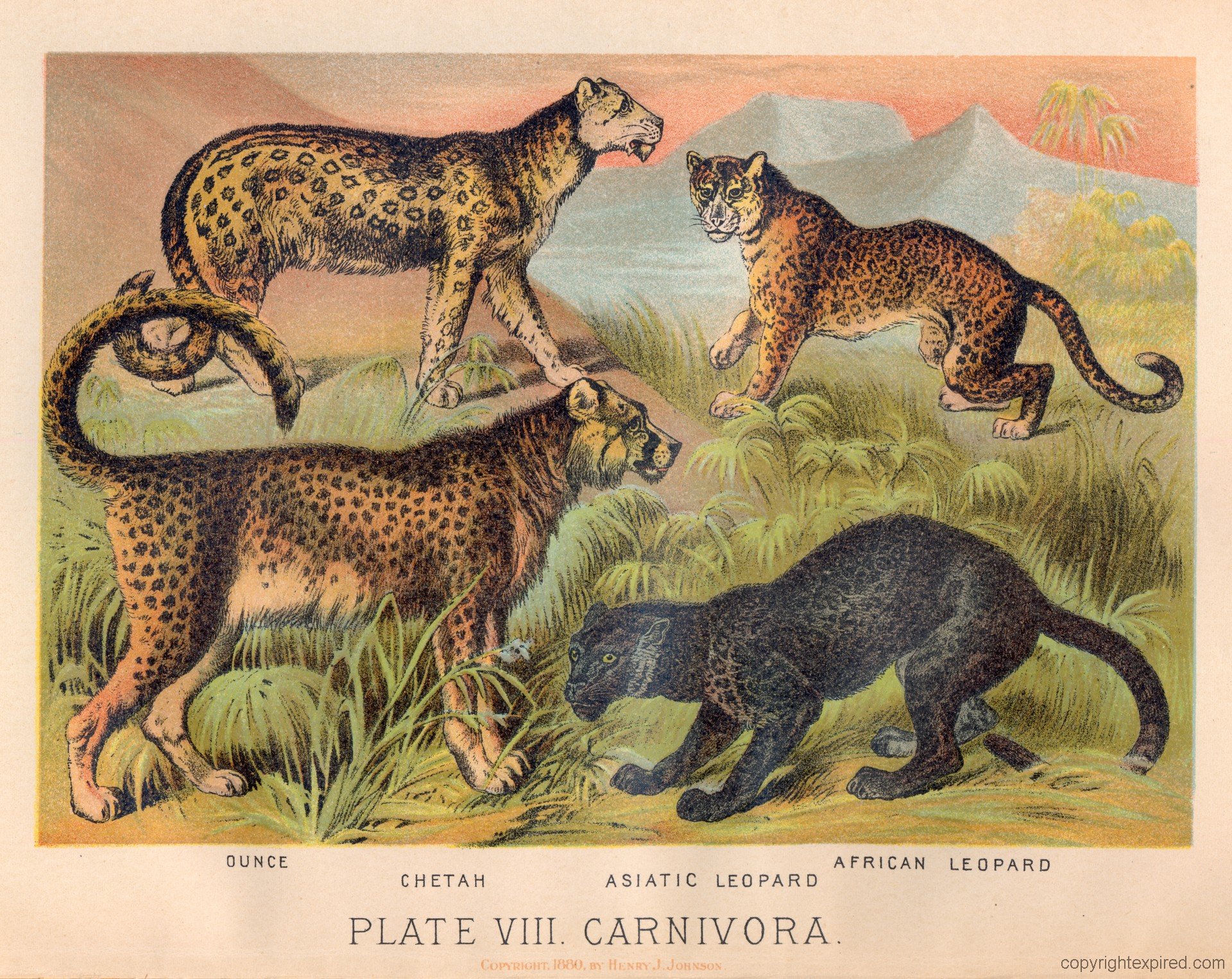
Be it ounce, or cat, or bear,
Pard, or boar with bristled hair,
In thy eye that shall appear
When thou wakest, it is thy dear:
Wake when some vile thing is near.
IN THE COMMENTS: furious_a said:
Artificially aroused men pursuing artificially enhanced women under the influence of artificially induced emotions.

Who says "Romance is dead"?
Kevin said:
I wonder if they watched Eternal Sunshine of the Spotless Mind and are going forward in spite of, or are going forward because of.

Wednesday, January 2, 2013

"A paparazzo hoping to get a picture of Justin Bieber in his Ferrari after the vehicle was pulled over by police in Los Angeles got struck and killed by an SUV instead."

"And as it turned out, the 18-year-old singer wasn't even in the sports car."

This seems to be an occasion for wheeling out that horrible old saying: He died doing what he loved. He thought he had Justin Bieber set up for a shot. The photographer was swelling with delight and then — blam — not from a Ferrari but an SUV. Let's hope he never knew what hit him — to coin a phrase — and never knew that Bieber wasn't even in that car. He died doing what he loved! He had his peak of paparazzi ecstasy and then... annihilation. A consummation. It's over.

But wait! Justin Bieber wants to speak:
"While I was not present nor directly involved with this tragic accident, my thoughts and prayers are with the family of the victim... Hopefully this tragedy will finally inspire meaningful legislation and whatever other necessary steps to protect the lives and safety of celebrities, police officers, innocent public bystanders, and the photographers themselves."
Oh, Justin. Not every screw-up is an argument for legislation. Putting "meaningful" in front of "legislation" is itself meaningful, but what does it mean? 1. It means meaninglessness, an empty existential cry in the face of helplessness. 2. It means I would like to soothe myself with the fantasy that if the right laws had been in place, the bad thing that just happened would not have happened. 3. It means that we can express meaning through laws, that laws work as expression, quite aside from whether they have any effect on the bad things we would like to call bad.

Now, should we also get on Bieber's case for calling what happened a "tragedy"?
Tragedy (Ancient Greek: τραγῳδία, tragōidia, "he-goat-song") is a form of drama based on human suffering that invokes in its audience an accompanying catharsis or pleasure in the viewing....
Pedants love to say that the word "tragedy" is misused, but I think we may have encountered a correct use of the word. That correct usage seems out of place with the rest of the statement, with its angst about prayer, inspiration, and meaning. One suspects Bieber bumbled into saying something he wouldn't have meant to say. It's meaning without a mind that meant it. We witness human suffering and feel... good!

ADDED: The more apt term is poetic justice — "a literary device in which virtue is ultimately rewarded or vice punished, often in modern literature by an ironic twist of fate intimately related to the character's own conduct." The key is the self-contained logic of the story. It makes sense. There should be no call for legislation to find meaning. The meaning is already there. What happened is exactly right: poetic justice. The Wikipedia page I just linked has some examples, and since we were just talking about Wile E. Coyote, I enjoyed seeing him first on the list of poetic justice in TV and film: "Wile E. Coyote always sets traps for Road Runner, only to end up in the traps themselves." The phrase "hoist with his own petard" expresses the concept. Did you know it's from "Hamlet":
"For 'tis the sport to have the engineer / Hoist with his own petard." (Shakespeare, Hamlet (III.iv.226).)
And did you know (again, from Wikipedia):
During the late 17th century, critics pursuing a neo-classical standard would criticize William Shakespeare in favor of Ben Jonson precisely on the grounds that Shakespeare's characters change during the course of the play.... When Restoration comedy, in particular, flouted poetic justice by rewarding libertines and punishing dull-witted moralists, there was a backlash in favor of drama, in particular, of more strict moral correspondence.