Showing posts with label Thoreau. Show all posts

Wednesday, August 28, 2013

The philosophy of travel... the psychology of travel...

I've been looking into the philosophy of travel, and I'm trying to get beyond the psychology of travel. It's not an easy journey, but at least I don't have to go through a metal detector and TSA patdown, and I can surround myself with >4 oz. glasses of whatever liquids I like. Here's the first substantial thing I found, a March 2000 essay by Pico Iyer: "Why we travel."

Let's see how far I can get on this leg of my journey. Iyer begins:
We travel, initially, to lose ourselves; and we travel, next, to find ourselves. We travel to open our hearts and eyes and learn more about the world than our newspapers will accommodate. We travel to bring what little we can, in our ignorance and knowledge, to those parts of the globe whose riches are differently dispersed. And we travel, in essence, to become young fools again — to slow time down and get taken in, and fall in love once more....
See? This is mostly psychology. What motivates us to go. (And I really don't believe people travel in order to spread their wealth to places that are relatively poor. Just give to charity. Or does he mean that we benefit the less fortunate by inflicting our physical presence upon them?)

Next Iyer cites an essay by George Santayana called, “The Philosophy of Travel” that stresses the work of travel.
Few of us ever forget the connection between “travel” and “travail,” and I know that I travel in large part in search of hardship — both my own, which I want to feel, and others’, which I need to see. 
I'd rather avoid hardship, but I'm sure I could find it somewhere in my own town — I could sit in on criminal trials or volunteer at the respite center — but I'd be ashamed to be satiating a personal need of mine.
Travel in that sense guides us toward a better balance of wisdom and compassion — of seeing the world clearly, and yet feeling it truly. For seeing without feeling can obviously be uncaring; while feeling without seeing can be blind.
Do you really see more clearly because you've traveled to faraway places? Have you spent much time in the worst neighborhoods of your own town? In order to travel to foreign countries, you might endure hardships of your own and you must spend a fair amount of money. These personal sacrifices of yours don't do anything for other people, and they incline you toward pleasures that will compensate, which seems to be the opposite direction from compassion. But some people do go to places where things really will be uncomfortable:
When you drive down the streets of Port-au-Prince, for example, where there is almost no paving and women relieve themselves next to mountains of trash, your notions of the Internet and a "one world order" grow usefully revised. Travel is the best way we have of rescuing the humanity of places, and saving them from abstraction and ideology.
How many of us travel to gawk at poor people? How many of those of us who might consider traveling to gawk at poor people have difficulty understanding poverty from merely reading about it? If you do travel to Port-au-Prince to see women relieve themselves next to mountains of trash, and they question why you are watching them, be sure to say, I have come here to witness this to shake myself out of my complacent abstractions and to gain wisdom. Look at that scene in your mind. It's not too abstract, is it? Aren't you ashamed of yourself?

But admit it: That's not the vacation you'd take! You might do that if it was your job — as a writer or photographer — but you're not going to spend your money to heighten your wisdom and compassion that way, are you? You're going somewhere else, somewhere you think will be amusing or uplifting, aren't you? Pico Iyer goes on to talk about less hardship-ridden trips, and he emphasizes getting outside of oneself:
On the most basic level, when I'm in Thailand, though a teetotaler who usually goes to bed at 9 p.m., I stay up till dawn in the local bars; and in Tibet, though not a real Buddhist, I spend days on end in temples, listening to the chants of sutras. I go to Iceland to visit the lunar spaces within me, and, in the uncanny quietude and emptiness of that vast and treeless world, to tap parts of myself generally obscured by chatter and routine.
Are not these all things you could achieve near home? You have lunar spaces within you, yet you need to go to Iceland to visit them? Why not sit in your room for an hour with your eyes closed, listening to classical music? Or walk to the nearest vantage point for the next sunset and gaze upon it? How much money would you save? $5,000? $10,000? Give it to charity! Now, was my prescription for your soul better or worse than Iyer's recommendation that you go to Iceland and Tibet? As for his Thailand recommendation, there's always a bar down the street. Pick a spot in the dangerous side of town.

Iyer quotes Albert Camus saying "what gives value to travel is fear." Iyer paraphrases "fear" as "disruption... (or emancipation) from circumstance, and all the habits behind which we hide." Do you accept that paraphrase? If that's the value of travel, are you really a traveler (or must you concede you're only a tourist)? Maybe you'll say you travel for disruption but not for actual fear, other than tiny first-world fears, like fear of flying, fear of having to navigate in an environment where not everything is in English, and fear of unfamiliar foods and faces. If you really are traveling for fear, are there no better ways to pursue fear, ways closer to home? In the old days people traveled for fear — fear of starving if they didn't go looking for food, fear of murderous enemies who were moving in on their home territory. That's old-school travel, and you know damned well you are not traveling like that. You're spending your extra money to take on circumscribed fear-stimulating circumstances. Why not go for a walk late at night in the bad part of your own town? Too dangerous?
And that is why many of us travel not in search of answers, but of better questions. 
And I'm blogging this essay in search of even better questions.
I, like many people, tend to ask questions of the places I visit, and relish most the ones that ask the most searching questions back of me: In Paraguay, for example, where one car in every two is stolen, and two-thirds of the goods on sale are smuggled, I have to rethink my every Californian assumption. 
Like the Californian assumption that there are parts of California that you should avoid? Forbes's list of cities with the most stolen cars is dominated, year after year, by Californian cities. Why did Iyer have these assumptions in the first place? Why does his California have such an inane meaning? If you have to go to Paraguay to disrupt that, I wonder about the quality of your mind. And yet somehow you have enough money to pay for a trip to Paraguay, to learn — what? — that life is gritty? That there is crime and poverty?
And in Thailand, where many young women give up their bodies in order to protect their families -- to become better Buddhists -- I have to question my own too-ready judgments.
You found that out by traveling to Thailand? How? That's something you learn from reading about it, not by going there, unless you yourself are a sex tourist. One answer to the Why Travel? question is: You travel to take advantage of poorer people. No one writes that in an essay. But Iyer is almost saying: Travel to see other travelers taking advantage of poorer people... because it will make you a better, wiser, more compassionate person. Why not read about problems like this and give your money to charities that try to help unfortunate people? His answer seems to be because it's about developing his mind. But shouldn't his mind already be developed past that point?

Iyer says that on return from some places — he mentions Southeast Asia — he's felt that he "was in love." Travel is a love affair. That's his metaphor. If so, staying home is monogamy, it's where the depth is, and where the thrill is too, if you have the depth yourself.
For if every true love affair can feel like a journey to a foreign country, where you can't quite speak the language, and you don't know where you're going, and you're pulled ever deeper into the inviting darkness, every trip to a foreign country can be a love affair, where you're left puzzling over who you are and whom you've fallen in love with....
Or is it more like being a stalker boyfriend of someone who does not and will never love you? Iyer makes light of what the tourist is to the people of the visited country:
We are the comic props in Japanese home-movies, the oddities in Maliese anecdotes and the fall-guys in Chinese jokes; we are the moving postcards or bizarre objets trouves that villagers in Peru will later tell their friends about. If travel is about the meeting of realities, it is no less about the mating of illusions: You give me my dreamed-of vision of Tibet, and I'll give you your wished-for California. And in truth, many of us, even (or especially) the ones who are fleeing America abroad, will get taken, willy-nilly, as symbols of the American Dream.
What happened to the love affair metaphor? That is not love. And why are you wheeling out the cheerful examples? What about the Luxor massacre (which took place 3 years before Iyer wrote this essay)? That's the most extreme exemplification of the hostility of the traveled-upon, but think of everything between that and some imagined affable Japanese person who thinks you're just a bit silly. Where's the love? A real love affair has love on both sides. The love Iyer talks about is like the love a teenager feels for a pop idol after the concert. You cannot enter that idol's life. It's an illusion. Find someone real to love. Once you get that far, Iyer's love metaphor makes the argument for staying home.

Iyer writes about many travel writers, and that's what he is too, a travel writer. That means he's not making money doing one thing, then spending some of those earnings on travel. He travels as part of making money, and the insight he gains is not merely for developing his mind — as he argues in his essay — it's for writing about the development of the mind (and festooning the inward reflection with colorful pictures of things the readers have not seen). But what about the rest of us? We could sit home reading these travel writers, who've taken on the expense and the hardship of travel, and we could develop our mind through reading and thinking and sojourning around home.

Iyer gets around to the Thoreau quote — "I have travelled a good deal in Concord" — which we were just talking about on this blog last month (on the topic of the distinction between a tourist and a traveler). Iyer throws in Emerson too: "traveling is a fool's paradise." Iyer argues by paraphrase. What Thoreau and Emerson really do is "insist on the fact that reality is our creation, and that we invent the places we see as much as we do the books that we read. What we find outside ourselves has to be inside ourselves for us to find it." Now, the sleight of hand:
So, if more and more of us have to carry our sense of home inside us, we also -- Emerson and Thoreau remind us -- have to carry with us our sense of destination. The most valuable Pacifics we explore will always be the vast expanses within us, and the most important Northwest Crossings the thresholds we cross in the heart. The virtue of finding a gilded pavilion in Kyoto is that it allows you to take back a more lasting, private Golden Temple to your office in Rockefeller Center....
Home really is superior, but somehow you need to leave home to understand that. But what if you already understand that? Then, why should you travel? And I mean why should you travel if you are not a travel writer, gathering new material?
And if travel is like love, it is, in the end, mostly because it's a heightened state of awareness, in which we are mindful, receptive, undimmed by familiarity and ready to be transformed. That is why the best trips, like the best love affairs, never really end.
The trip that never ends is home. 

Tuesday, June 25, 2013

"In such situations, it is not ever an animal’s 'fault' — it is the dog-owner’s fault, of course."

"Seeing a dog-owner with a massive dog, we are likely to think that the dog-owner is enjoying his spurious power: he can cause extreme suffering, if he wishes to, and so we must be grateful that he is reining in his animal, which would love to bark and rush at us. A dog is an expression of its owner’s fantasy-self—perhaps?"

Says Joyce Carol Oates, explaining her story "Mastiff," which begins:
Earlier, on the trail, they’d seen it. The massive dog. Tugging at its master’s leash, so that the young man’s calves bulged with muscle as he fought to hold the dog back. Grunting what sounded like “Damn, Rob-roy! Damn dog!” in a tone of exasperated affection.
Mastiff... massive... master...

Rob-Roy?
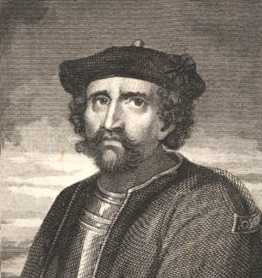
Robert Roy MacGregor (Scottish Gaelic: Raibeart Ruadh MacGriogair; baptised 7 March 1671 – 28 December 1734), usually known simply as Rob Roy or alternately Red MacGregor, was a famous Scottish folk hero and outlaw of the early 18th century, who is sometimes known as the Scottish Robin Hood. Rob Roy is anglicised from the Gaelic Raibeart Ruadh, or Red Robert. (He had red hair, Ruadh being Gaelic for red-haired, though it darkened to auburn in later life.)
Names. What does it mean to name the dog Rob-Roy? Oates's scary mastiff isn't even red. He's black.

We were out on the north shore of Lake Mendota the other day with our borrowed black dog named Zeus. Along came another black Lab. "What's his name?" we ask, and the man says, "Thor."

Seeing a dog-owner with a massive dog, we are likely to think that the dog-owner is enjoying his spurious power....

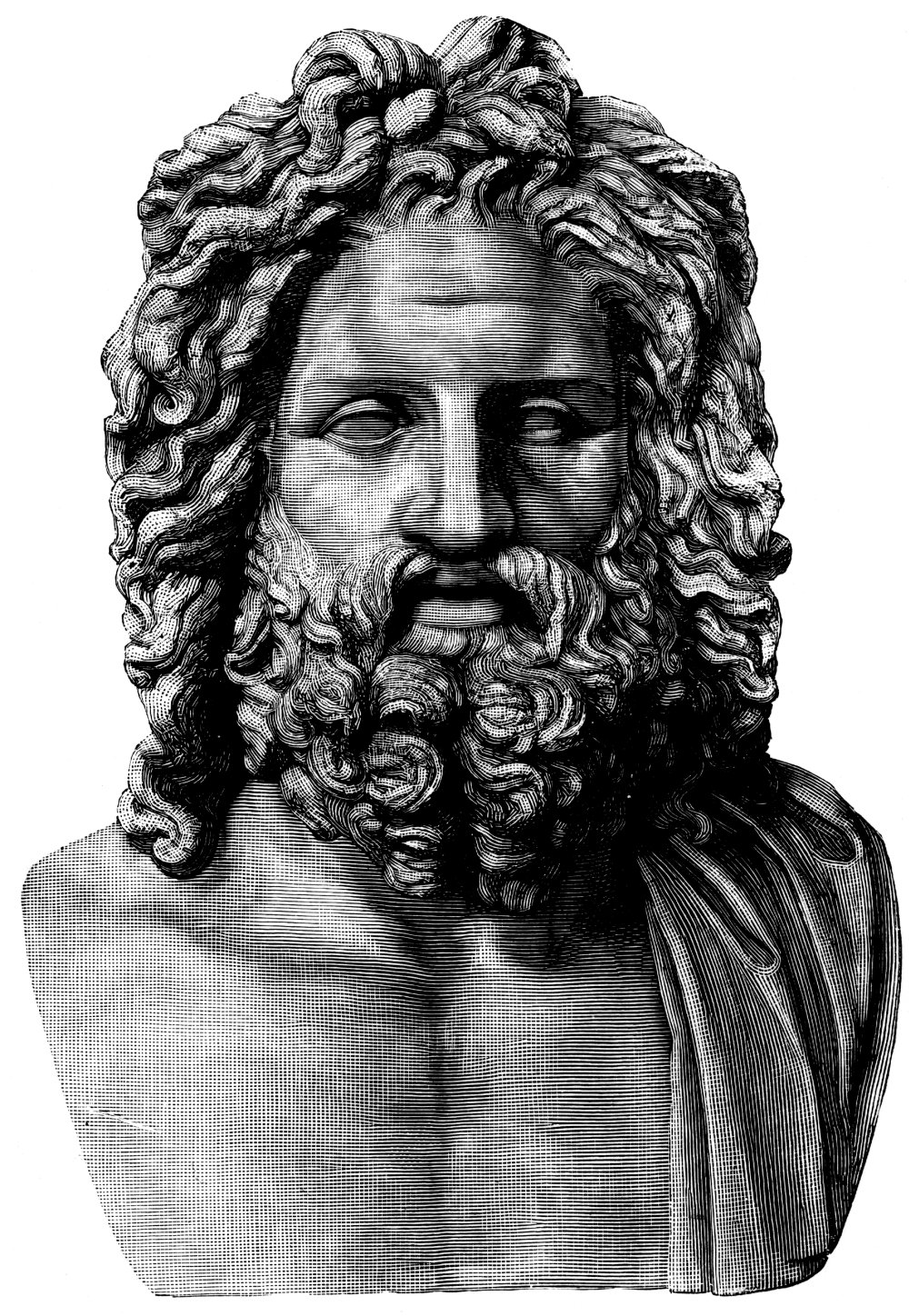
I google for an image of the god Thor, and Google autocompletes to Thoreau...

Monday, June 17, 2013

"Ask yourself: if I were a Chinese spy, why wouldn't I have flown directly into Beijing? I could be living in a palace petting a phoenix by now."

Edward Snowden answers questions, including "Edward, there is rampant speculation, outpacing facts, that you have or will provide classified US information to the Chinese or other governments in exchange for asylum. Have/will you?" His answer is such a conundrum...
This is a predictable smear that I anticipated before going public, as the US media has a knee-jerk "RED CHINA!" reaction to anything involving HK or the PRC, and is intended to distract from the issue of US government misconduct. Ask yourself: if I were a Chinese spy, why wouldn't I have flown directly into Beijing? I could be living in a palace petting a phoenix by now.
... that the questioner comes back and demands "a flat yes or no." He says:
No. I have had no contact with the Chinese government. Just like with the Guardian and the Washington Post, I only work with journalists.
I still don't know the complete answer to the first question, however, which asked if he will provide — that is, in the future — classified information to the Chinese.
He gives the flat "no," but I see that the followup question was "Regarding whether you have secretly given classified information to the Chinese government, some are saying you didn't answer clearly - can you give a flat no?" That refers only to the past: have you given info. He says "no" only to that, and the sentence after the "no" also refers only to the past. The next sentence is in the present tense: I only work with journalists. There is no flat no about what he might do in the future. Even assuming that he's scrupulous about truth-telling now — we can infer that he wasn't scrupulous about the promises he made to gain security clearance — he has not made an assertion about the future.

Also "I could be living in a palace petting a phoenix by now" could be read as a clue that he's making things up, since there is no such beast as a phoenix. I check "phoenix" at Urban Dictionary:
3. Phoenix      128 up, 98 down
Coolest person you will ever meet. They're smart, funny, and extremely good-looking. In a nutshell they're the one everyone wants to be friends with and date.
You could pet that. (Miscellaneous: Urban Dictionary definitions #1 and #2 relate to the city in Arizona. Factoid discovered in Googling "phoenix": "Image of Jesus appears on floor tile at Phoenix airport... The smudge in Terminal 3 of Phoenix Sky Harbor International Airport has become a pilgrimage site in recent weeks, as visitors have come to see for themselves whether the Lord and Savior flies coach or first-class.")

Back to Snowden. Asked why he didn't stay in this country, he expresses complete mistrust for the legal system:
[T]he US Government...  immediately and predictably destroyed any possibility of a fair trial at home, openly declaring me guilty of treason and that the disclosure of secret, criminal, and even unconstitutional acts is an unforgivable crime. That's not justice, and it would be foolish to volunteer yourself to it if you can do more good outside of prison than in it.
Perhaps another way of putting this — without calling the legal system corrupt — would be to admit that you know you have committed serious crimes and the evidence is so clear that you are nearly certain that you will be convicted in a perfectly fair trial.

The final clause can stand as an independent opinion: Even with full justice, it's foolish to volunteer to go to prison if you think you can do more good outside of prison. In classic civil disobedience, one accepts the law's punishment. Volunteering to go to prison is portrayed as admirable and courageous, and not foolish. He is calling Henry David Thoreau and Martin Luther King, Jr. foolish, except to the extent that he's got a loophole: The question whether you do more good in prison than out of prison.

For Thoreau and King, perhaps being imprisoned does good — it's an important gesture. But for Snowden — he's done the cost benefit analysis and he can do more good if he stays free. That strikes me as ludicrous, but there's also the out of saying you're not doing old-fashioned civil disobedience. You're redefining it for a new era.

Sunday, June 9, 2013

"Ten Reasons To Live In A Van."

By Ken Ilgunas, who lived in a van to avoid student debt while he attended Duke University.
"Vandwelling," you might expect, had more than its share of drawbacks. Mice would move into my ceiling upholstery, washing pots and pans became so inconvenient I stopped washing them altogether, and the bathroom was a quarter-mile sprint from my parking space.

But people adapt, mice are flattened with frying pans, and bladders grow firm and strong.
Pots and pans? I don't get why you'd cook inside the van. But, okay. Note that the hardship is mitigated by using Duke University resources: the parking space, the gym for showers, etc. Obviously, if more students tried to do this the university would crack down. And you couldn't get away with this at a school — like the University of Wisconsin — with limited parking. And yet... there's always that parking at Walmart. And a gym membership is much cheaper than renting an apartment....

Here's the book Ilgunas wrote about his experience: "Walden on Wheels: On The Open Road from Debt to Freedom."

Thursday, April 4, 2013

"Society is commonly too cheap. We meet at very short intervals..."

"... not having had time to acquire any new value for each other. We meet at meals three times a day, and give each other a new taste of that old musty cheese that we are. We have had to agree on a certain set of rules, called etiquette and politeness, to make this frequent meeting tolerable and that we need not come to open war. We meet at the post-office, and at the sociable, and about the fireside every night; we live thick and are in each other's way, and stumble over one another, and I think that we thus lose some respect for one another. Certainly less frequency would suffice for all important and hearty communications. Consider the girls in a factory — never alone, hardly in their dreams. It would be better if there were but one inhabitant to a square mile, as where I live. The value of a man is not in his skin, that we should touch him."

Henry David Thoreau, "Walden."

ADDED: This passage cries out for a link to "Caring for Your Introvert":
Extroverts have little or no grasp of introversion. They assume that company, especially their own, is always welcome. They cannot imagine why someone would need to be alone; indeed, they often take umbrage at the suggestion. As often as I have tried to explain the matter to extroverts, I have never sensed that any of them really understood. They listen for a moment and then go back to barking and yipping....

We can only dream that someday, when our condition is more widely understood, when perhaps an Introverts' Rights movement has blossomed and borne fruit, it will not be impolite to say "I'm an introvert. You are a wonderful person and I like you. But now please shush."

How can I let the introvert in my life know that I support him and respect his choice? First, recognize that it's not a choice. It's not a lifestyle. It's an orientation.

Tuesday, April 2, 2013

Long-headed.

Long-headed?! Meade questions my word use in a previous post. It came to mind because I was just law-professing the famous Supreme Court case Youngstown Sheet & Tube Co. v. Sawyer, within which the long-headed lawprof-turned-justice Felix Frankfurter — explaining that the Constitution's Framers "were not inexperienced doctrinaires" — wrote:
These long-headed statesmen had no illusion that our people enjoyed biological or psychological or sociological immunities from the hazards of concentrated power. It is absurd to see a dictator in a representative product of the sturdy democratic traditions of the Mississippi Valley. The accretion of dangerous power does not come in a day. It does come, however slowly, from the generative force of unchecked disregard of the restrictions that fence in even the most disinterested assertion of authority.
The "representative product of the sturdy democratic traditions of the Mississippi Valley" was Harry Truman, who had accreted a little too much power.

The (unlinkable) OED defines "long-headed" — definition #2 — as "Of great discernment or foresight; discerning, shrewd, far-seeing." The historical examples include:
1711   R. Steele Spectator No. 52. ⁋3   Being a long-headed Gentlewoman, I am apt to imagine she has some further Design than you have yet penetrated....
1841   Dickens Old Curiosity Shop ii. lxvii. 178   Men of the world, long-headed customers, knowing dogs.
1864   J. R. Lowell McClellan or Lincoln? in Prose Wks. (1890) V. 173   Mr. Lincoln is a long-headed and long-purposed man.
Searching my own files, I see this in Henry David Thoreau's "Walden":
Or on a Sunday afternoon, if I chanced to be at home, I heard the cronching of the snow made by the step of a long-headed farmer, who from far through the woods sought my house, to have a social "crack"; one of the few of his vocation who are "men on their farms"; who donned a frock instead of a professor's gown, and is as ready to extract the moral out of church or state as to haul a load of manure from his barn-yard. We talked of rude and simple times, when men sat about large fires in cold, bracing weather, with clear heads; and when other dessert failed, we tried our teeth on many a nut which wise squirrels have long since abandoned, for those which have the thickest shells are commonly empty.
Now, don your frock, cronch on in to the comments section, and have a social crack with the long-headed squirrels of Althouse. Extract morals, haul a load of manure, talk of rude and simple times, or try your teeth on the toughest empty nuts. You know who they are!

Sunday, January 13, 2013

"We need more harlequins, fewer ticktockmen."

Said Icepick in last night's thread about Boston banning drinking games in bars. He began:
I recently read "The Scouring of the Shire" chapter from Return of the King. It was disturbing how much the Shire under (ultimately) Saruman's direction sounded like modern America. The country is being run by over-officious jerks, and the American people are putting up with it. Land of the free no more....
And then:
We need more harlequins, fewer ticktockmen.
A link goes to the Harlan Ellison story "Repent Harlequin!' Said The Ticktockman." 

Icepick advises:
Professor, I believe you need some more tags. One for over-officiousness, and perhaps tags for harlequins (see Swartz, for example) and for ticktockmen (anything with Bloomberg).
Ellison begins his story with a quote from Thoreau's "Civil Disobedience":
The mass of men serve the state thus, not as men mainly, but as machines, with their bodies. They are the standing army, and the militia, jailors, constables, posse comitatus, etc. In most cases there is no free exercise whatever of the judgment or of the moral sense; but they put themselves on a level with wood and earth and stones; and wooden men can perhaps be manufactured that will serve the purposes as well. Such command no more respect than men of straw or a lump of dirt. They have the same sort of worth only as horses and dogs. Yet such as these even are commonly esteemed good citizens. Others as most legislators, politicians, lawyers, ministers, and office-holders serve the state chiefly with their heads; and, as they rarely make any moral distinctions, they are as likely to serve the Devil, without intending it, as God. A very few, as heroes, patriots, martyrs, reformers in the great sense, and men, serve the state with their consciences also, and so necessarily resist it for the most part; and they are commonly treated as enemies by it.
Ellison introduces that quote with: "There are always those who ask, what is it all about? For those who need to ask, for those who need points sharply made, who need to know 'where it's at,' this...."

That story was published in 1965, when the phrase "where it's at" was quite the thing

ADDED: I just bought "Masterpieces: The Best Science Fiction of the 20th Century," which contains "Repent Harlequin!"